
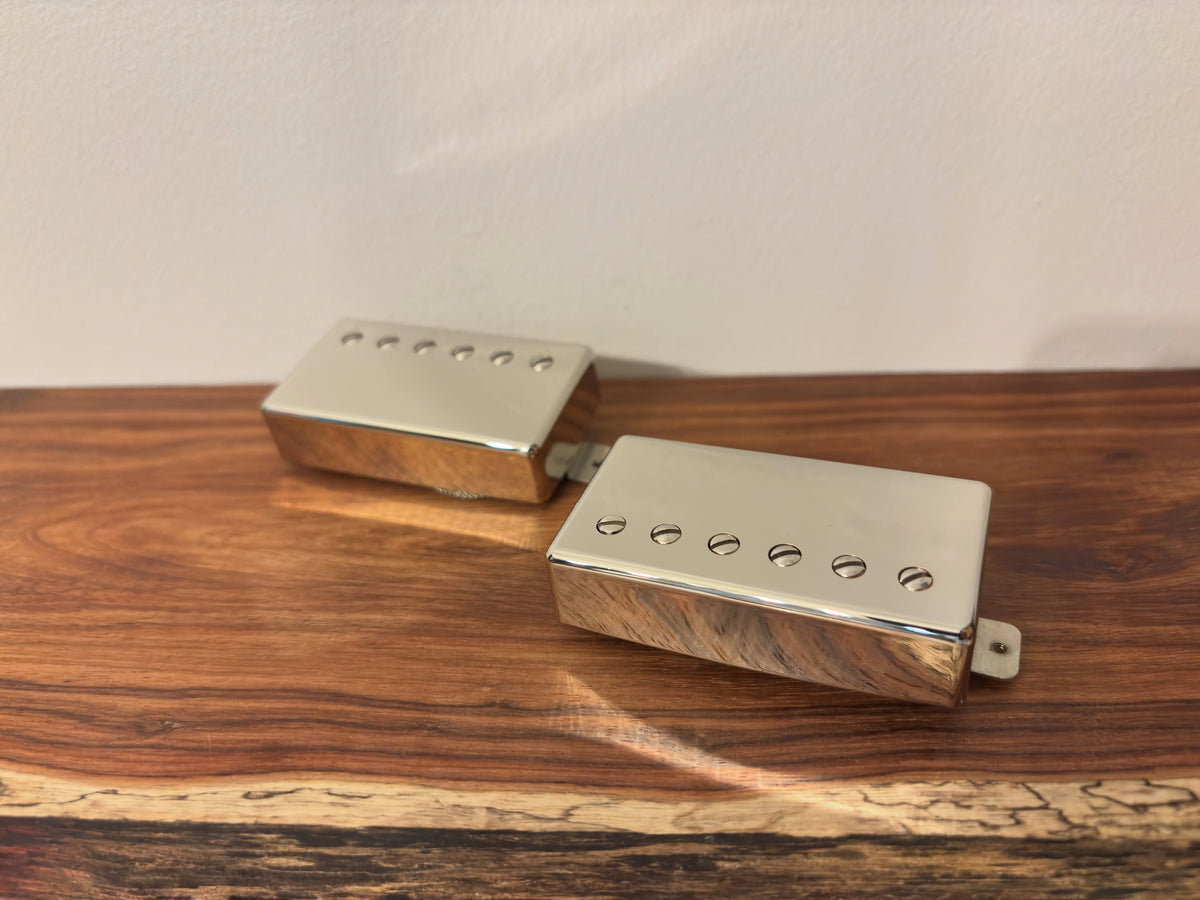
A pickup can have the right cover, the right DC resistance, and a familiar name on the box, yet still feel completely wrong in your guitar. That is why vintage vs modern pickup voicing is more useful than a simple old-versus-new argument. You are choosing how your instrument reacts under your hands, how it sits with an amp, and whether it gives you more of the sound already living in the wood and hardware.
Neither approach is automatically better. A great vintage-voiced set can make a clean amp feel alive and a driven amp feel touch-sensitive. A well-designed modern set can tighten a loose low end, give a bridge pickup real authority, and stay clear when a high-gain rig would turn a lower-output pickup into fizz. The useful question is not which camp wins. It is what your guitar and your playing actually need.
What Pickup Voicing Really Means
Voicing is the pickup's overall tonal and dynamic personality. It comes from much more than output. Magnet type and strength, coil wire, winding pattern, coil geometry, pole pieces, baseplates, and the relationship between the two coils in a humbucker all affect the result.
Output matters, but it is not a tone description. A hotter pickup can have more midrange, more compression, and more push into the front of an amp or pedal. It can also be surprisingly clear if the coil shape and resonant peak are designed for it. Meanwhile, a low-output pickup is not automatically bright, open, or vintage sounding. The details matter.
Think of voicing as the pickup's EQ curve, attack, sustain behavior, and willingness to reveal your picking dynamics. It determines whether a note blooms after the initial hit, barks in the upper mids, stays round in the neck position, or holds together under serious gain.
Vintage vs Modern Pickup Voicing in Practice
Vintage-voiced pickups generally aim for the feel and response associated with classic guitar eras. They tend to have moderate output, a more open dynamic range, and less built-in compression. That does not mean weak or thin. A good vintage voice has plenty of authority, but it leaves room for the guitar, amp, speakers, and player to do their jobs.
On a Strat-style guitar, that might mean chime on the top strings, a hollow and useful in-between sound, and a bridge pickup that cuts without becoming brittle. On a PAF-style humbucker, it may mean a clear low end, vocal mids, and enough treble detail that chords remain readable through an overdriven amp.
Modern-voiced pickups are often designed around the demands of contemporary rigs and stages: higher gain, larger pedalboards, drop tunings, fast articulation, coil splitting, and more consistent balance across pickup positions. They may use higher output, tighter bass response, a more controlled top end, or a focused midrange that helps a guitar stay present in a dense mix.
The word modern can be misleading, though. It does not have to mean sterile, harsh, or overly hot. A modern voice can still be expressive and musical. The difference is often in how deliberately it controls the frequencies that become troublesome at volume or under gain.
The Vintage Feel: Space Around the Note
Players often describe vintage-voiced pickups as open, woody, airy, or three-dimensional. Those words point to a real playing experience. The pickup usually gives the initial attack plenty of definition, then lets the note develop naturally rather than flattening it into a compressed block of sound.
This is especially rewarding if you work your volume knob, pick lightly and hard within the same song, or live in the space between clean and edge-of-breakup tones. A lower-to-moderate output pickup lets you clean up without losing all your presence. It also lets a great amp react more dramatically to the guitar.
The trade-off is that vintage voicing can expose weak points elsewhere in the rig. A bright guitar with an aggressive bridge position may still need a more balanced wind or a carefully chosen magnet. A bass-heavy amp can make an open neck humbucker feel woolly. And if you need huge saturation from the pickup itself, a traditional output level may ask more from your boost, overdrive, or amp.
Vintage voicing is often a strong fit for blues, classic rock, country, indie, funk, roots music, jazz, and worship players who need clarity across clean, ambient, and lightly driven sounds. It also suits players who want their guitar to sound like itself, only more responsive and more complete.
The Modern Feel: Control, Focus, and Push
A modern-voiced pickup often feels more immediate. Notes can have a firmer front edge, the low strings may track with more control, and palm-muted parts can hit with more authority. This is valuable when your amp is already working hard or when the band mix has keyboards, multiple guitars, backing tracks, and a loud drummer competing for the same real estate.
The bridge pickup is where many players notice the difference first. A modern bridge humbucker can add punch and midrange focus that keeps lead lines from disappearing. In a down-tuned guitar, it can prevent the lowest strings from becoming a broad, undefined wash. In a single-coil guitar, a more contemporary bridge wind can fill out an otherwise thin position without throwing away the snap that makes the guitar useful.
The trade-off is compression and reduced contrast. More output can make every note feel confident, but it can also make soft and hard picking feel closer together. A heavily focused midrange can be exactly what a live mix needs, yet sound congested alone in a bedroom. The same pickup that sounds massive through a gain channel may be too forceful for a clean, black-panel-style amp.
Modern voicing makes sense for hard rock, metal, progressive music, pop sessions, high-gain worship rigs, drop-tuned instruments, and players who need a guitar to deliver a defined job every night. It is also a smart answer for a naturally dark guitar that needs more cut and tighter bass.
Your Guitar Is Part of the Circuit
A pickup never exists in isolation. Two guitars with the same model can respond differently because of wood density, neck stiffness, bridge design, fretboard material, scale length, pots, capacitor values, cable capacitance, and string gauge. The difference may not be subtle.
A bright Tele-style guitar may love a neck pickup with a little extra warmth and a bridge pickup that keeps the ice-pick frequencies in check. A dark Les Paul-style guitar may need a lower-output humbucker with clear upper mids so the neck position does not turn to mud. A basswood superstrat with a floating bridge might benefit from a modern voice that reinforces low-end definition without becoming sharp.
This is why copying a favorite artist's pickup spec does not always work. Their guitar, amp, speakers, hands, and recording chain are not yours. Start with the problem your instrument has, not just the tone you heard on a record.
Do Not Choose by DC Resistance Alone
DC resistance is useful information, but it is only one piece of the design. It is often used as a shorthand for output, even though wire gauge, coil dimensions, magnet material, and magnetic field strength change the real-world result dramatically.
Two humbuckers can read a similar resistance and feel miles apart. One may be broad, clear, and vintage leaning. The other may be mid-forward, compressed, and built to push an amp. The same goes for single coils, where stagger, magnet grade, and winding approach can have as much effect on the final voice as the number printed on a meter.
If you are comparing pickups, listen for the words that describe response: tight, open, chewy, percussive, glassy, thick, balanced, dry, compressed, or dynamic. Those terms tell you more about the playing experience than one specification ever can.
A Better Way to Decide
Start by identifying what frustrates you when you play your current guitar. If the neck pickup is muddy, do you need less output, more upper-mid clarity, different pot values, or a height adjustment? If the bridge is harsh, is the pickup truly too bright, or is it simply too close to the strings? A setup can solve more than people expect.
Then consider the gain level where you spend most of your time. Players who live on clean and edge-of-breakup sounds generally hear and value dynamic range more than players using saturated amps. If your rig is high gain, tight bass and controlled highs may matter more than airy top-end extension.
Finally, think about the role of each position. A matched set does not mean every pickup needs identical output or EQ. A slightly hotter bridge can create a practical balance. A clearer neck pickup can make the position usable for more than smooth lead tones. Custom voicing gives you room to solve those position-specific problems instead of accepting a compromise set.
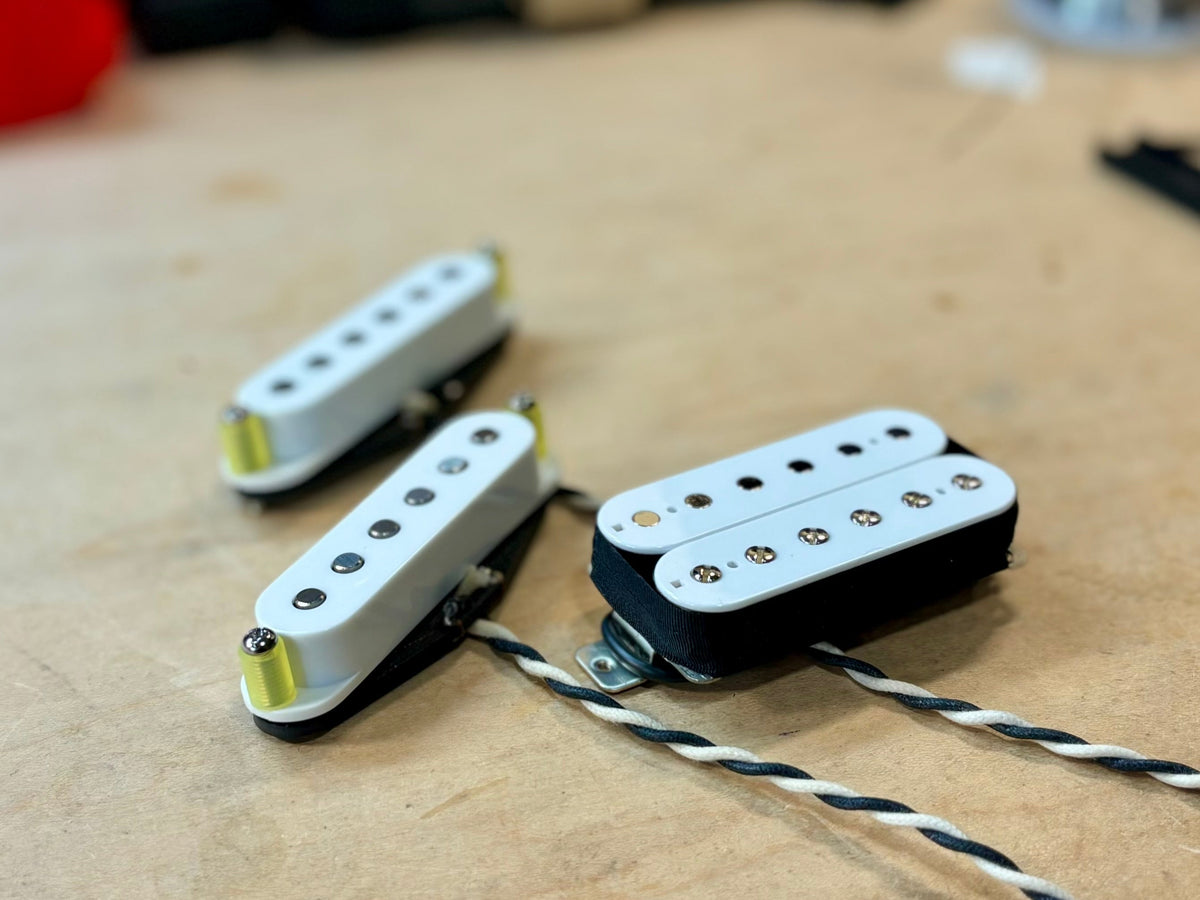
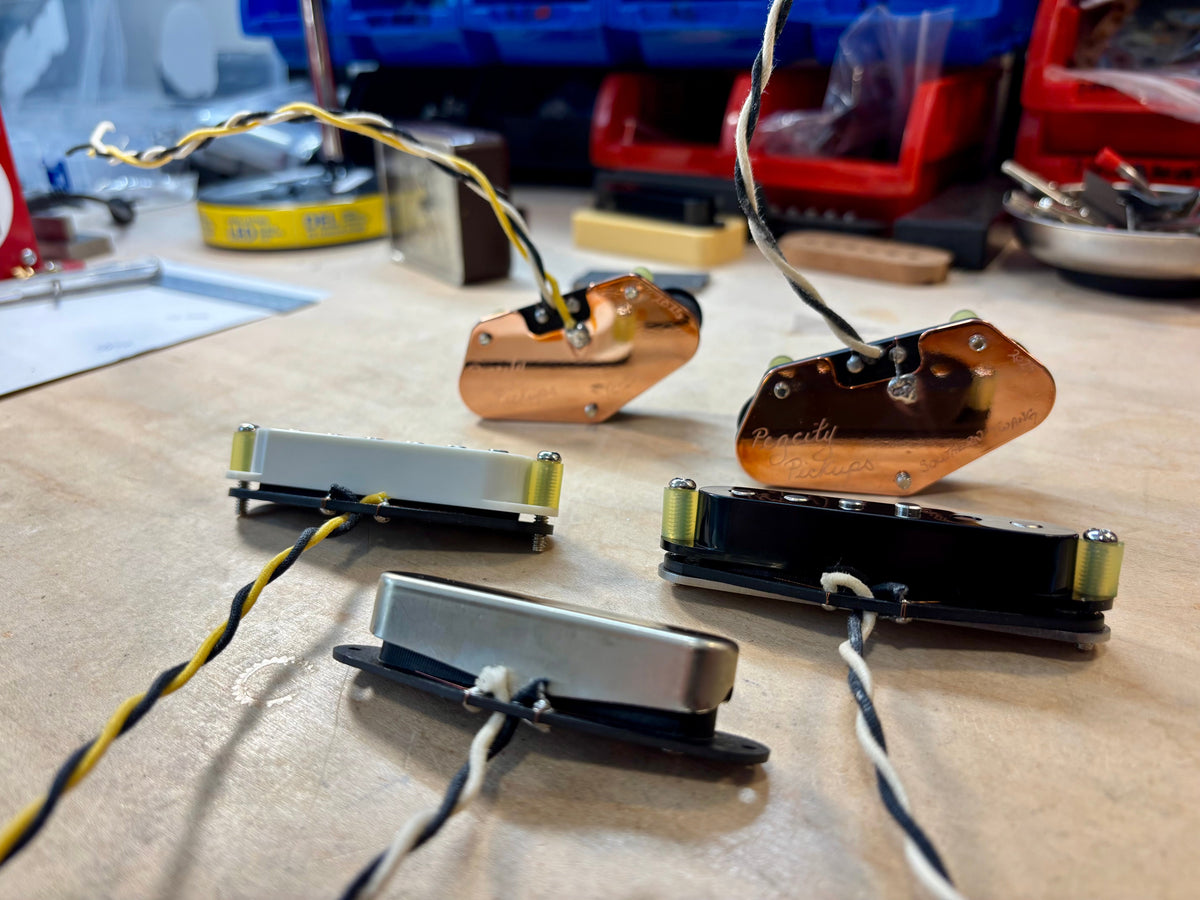
At Pegcity Pickups, that conversation is part of the work. Tell us about the guitar, the amp, your tuning, your gain level, and the sound that is not working. The best pickup choice is usually not about chasing a label. It is about making the guitar in your hands feel like the one you do not want to put down.
A vintage voice can bring out the detail your guitar already has. A modern voice can give it the focus and muscle it is missing. Trust the musical problem in front of you, and choose the pickup that makes you want to play one more song.

Leave a comment
This site is protected by hCaptcha and the hCaptcha Privacy Policy and Terms of Service apply.