
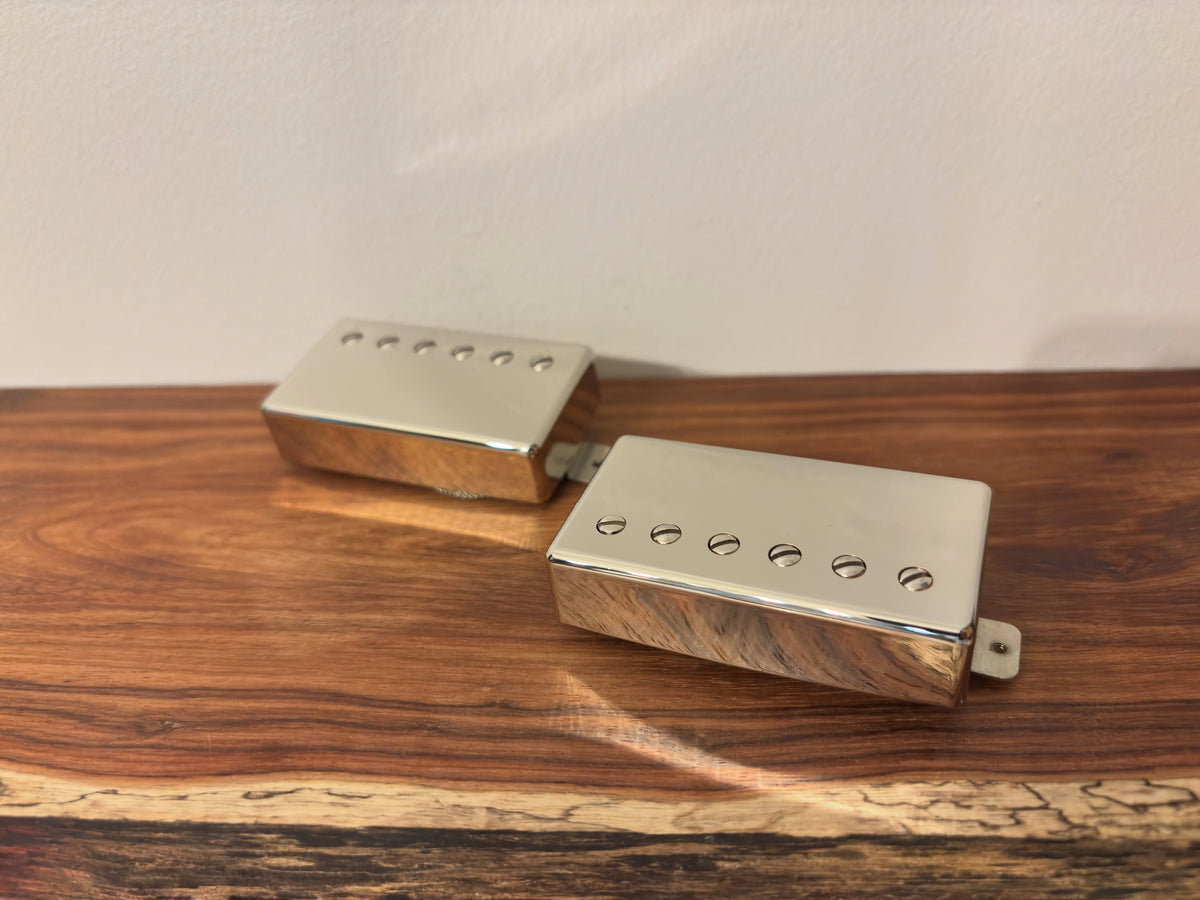
A Strat pickup upgrade can turn a guitar you already love playing into the one you reach for first. Maybe the neck pickup gets woolly when you add gain. Maybe the bridge turns thin and sharp the second the band gets loud. Or maybe the guitar sounds fine alone but disappears beside drums, bass, and another guitar.
The answer is not automatically “more output.” A great Strat pickup set should let the guitar keep its familiar snap and openness while giving each position a useful job. That means looking at the whole instrument: its woods and hardware, your amp, your pedals, your hands, and the sounds you actually need onstage or in a recording.
Start with the problem, not the pickup label
“Vintage,” “hot,” and “noiseless” are useful descriptions, but they are not tonal guarantees. Two Strat-style guitars can react very differently to the same set. A bright ash-body guitar with a maple board may need a different recipe than a warmer alder guitar with a rosewood board. Even the pots, capacitor, pickup height, strings, and amp settings can change the result more than players expect.
Before choosing a Strat pickup upgrade, describe what is getting in your way. If your neck pickup is muddy, you may need more clarity and a tighter low end rather than extra power. If your bridge pickup is weak, a slightly overwound bridge coil or a more focused magnet recipe may provide the push you are missing. If positions two and four feel too polite, balance and pickup height might be part of the fix.
A good pickup builder should ask about more than your favorite artist. Tell them what guitar you own, what amp you play, whether you use gain, where the guitar feels lacking, and what you love about it already. The goal is not to paste someone else’s tone onto your Strat. It is to make your Strat sound more like itself on a great day.
What changes when you upgrade Strat pickups?
A pickup hears the strings through a mix of coil wind, wire type, magnet material and charge, pole geometry, and component choices. Small changes in those areas affect attack, midrange, output, compression, and the way a note cleans up when you roll back the volume knob.
A lower-output, vintage-leaning set often has more air around the note. You may hear clearer chord separation, a more immediate pick attack, and that elastic response players associate with classic Strat tones. These sets can be outstanding for clean amps, edge-of-breakup playing, blues, country, funk, worship, and recording situations where a guitar needs to sit around a vocal instead of flattening everything in its path.
More wind generally brings more midrange weight and a stronger signal. That can make a bridge pickup feel fuller and help leads hold together with overdrive. The trade-off is that too much output can reduce some of the open, bell-like character people want from a Strat. There is nothing wrong with a hotter set if it serves the music, but “hotter” should be a deliberate choice, not a default fix.
Magnets matter as much as the winding. Alnico types and magnet strength influence feel as well as EQ. Some players want a soft, rounded attack with sweeter highs. Others want firmer bass, sharper note definition, and a little more punch under a heavy right hand. The useful question is not which magnet is objectively best. It is which response helps you play your best.
The bridge pickup deserves special attention
The bridge is where many factory Strat sets fall short. A traditional bridge coil can be wonderfully cutting, but it can also become ice-picky through a bright amp, especially when the tone control does not affect it. A bridge-specific wind can add enough body to make the position genuinely useful without making it sound like a small humbucker trapped in a single-coil cover.
Wiring is part of that decision. Connecting the second tone control to the bridge pickup is one of the simplest, most worthwhile changes on many Strats. It lets you retain the bite for rhythm work, then shave the hard edge when a lead needs more muscle. A treble-bleed circuit can also help if you use the volume knob constantly and want the top end to remain present as you roll down.
Choose the pickup style around your real playing
A traditional three-single-coil set is still hard to beat for touch sensitivity and unmistakable Strat character. The trade-off is 60-cycle hum in positions one, three, and five. For many players, that noise is a manageable part of the sound. For others, particularly those using high gain, compressors, recording rigs, or challenging stage power, it can become a distraction.
A reverse-wound, reverse-polarity middle pickup gives hum-canceling operation in positions two and four while preserving classic single-coil construction. That is a practical sweet spot for a huge number of players. You get the quack, the cluck, and a quieter combined setting for clean rhythm parts.
Noiseless designs are worth considering if silence is essential, but they are not all voiced alike. Some favor smoothness and output, while others aim for a more open single-coil feel. The key is to avoid treating “noiseless” as a category that tells you everything about tone. Ask whether the design retains the dynamics, high-end detail, and string-to-string separation you rely on.
If you cover everything from clean worship textures to louder rock sets, a calibrated set with a slightly stronger bridge is often the sensible middle ground. If you live on a clean or barely breaking-up amp, a lower-output vintage recipe may feel more alive. If you use fuzz, stacked drives, or a loud British-style amp, you may want a pickup that keeps the bass focused and the high end controlled when the gain comes on.
Pickup height can make or break the result
Do not install a new set, raise it as high as possible, and decide in five minutes that it is wrong. Single-coil pickups are sensitive to height. Too close to the strings, magnetic pull can affect sustain and intonation, particularly on the bass side. The sound can become harsh, compressed, or oddly warbly. Too low, and the guitar may feel weak and distant.
Start with the pickups at a moderate height, then listen through the amp you actually use. Fret the last note on each outer string and adjust in small increments. Bring the bridge up until it has enough authority, then balance the middle and neck around it. Pay attention to volume from string to string, not just the overall output.
This process takes patience, but it costs nothing and often reveals more of the pickup’s range. A good Strat does not need every position to have identical volume. It needs the transition between positions to feel musical and intentional.
Do not overlook the rest of the circuit
A Strat pickup upgrade is also an opportunity to inspect the wiring beneath the pickguard. Worn switches, unreliable output jacks, tiny factory pots, and poor solder connections can make excellent pickups seem disappointing. Quality controls and a clean wiring job improve reliability as much as they improve confidence on a gig.
Pot values deserve thought as well. Most traditional Strat circuits use 250k volume and tone pots because they help keep single coils from becoming overly bright. A guitar that sounds dark may benefit from checking whether its actual pot values are running low. A guitar that is painfully bright may need a different capacitor choice, wiring arrangement, or a pickup voice with a more rounded top end. There is no magic parts list that works for every Strat.
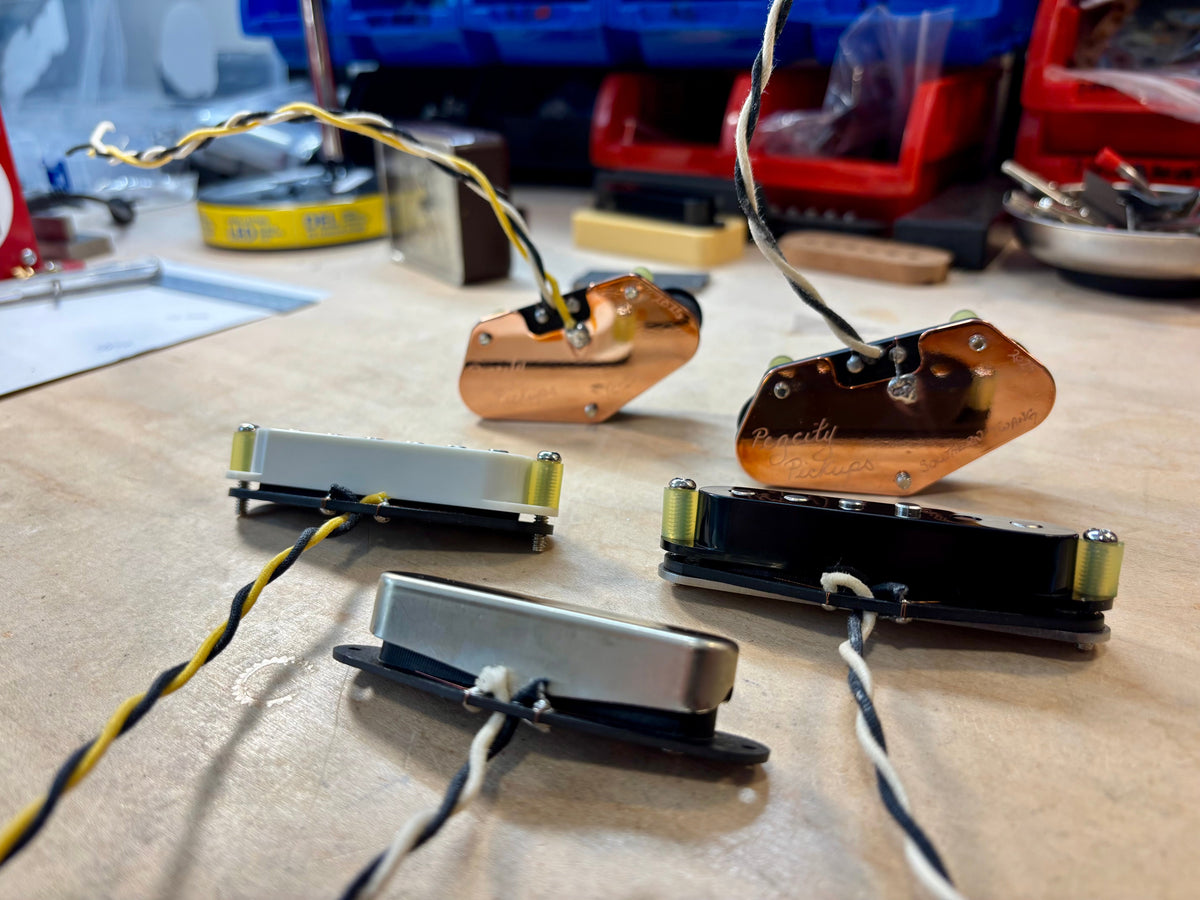
At Pegcity Pickups, this is why a conversation before winding matters. A hand-built set can be voiced around the guitar and the player rather than forcing a generic solution onto a very personal instrument.
When a rewind or custom set makes more sense
If you have original pickups with history, a rewind may be the right move. A careful rewind can preserve the original look and much of the instrument’s identity while restoring a failed coil or refining the voice. For a vintage guitar, that can be a more thoughtful choice than replacing every part with something new.
A custom set is especially useful when your needs are specific: perhaps you want a vintage neck and middle with a stronger bridge, a particular middle-pickup polarity for an unusual wiring scheme, or a set that stays articulate with a darker amp. Builders working on customer instruments also benefit from being able to specify output balance, polarity, covers, and tonal priorities instead of making a near-enough factory set fit.
The best upgrade is not the one with the biggest numbers on the spec sheet. It is the one that makes you stop fighting the guitar. When the neck stays clear, the bridge has a voice worth using, and every switch position inspires a different part, you will spend less time adjusting your rig and more time making music.

Leave a comment
This site is protected by hCaptcha and the hCaptcha Privacy Policy and Terms of Service apply.