
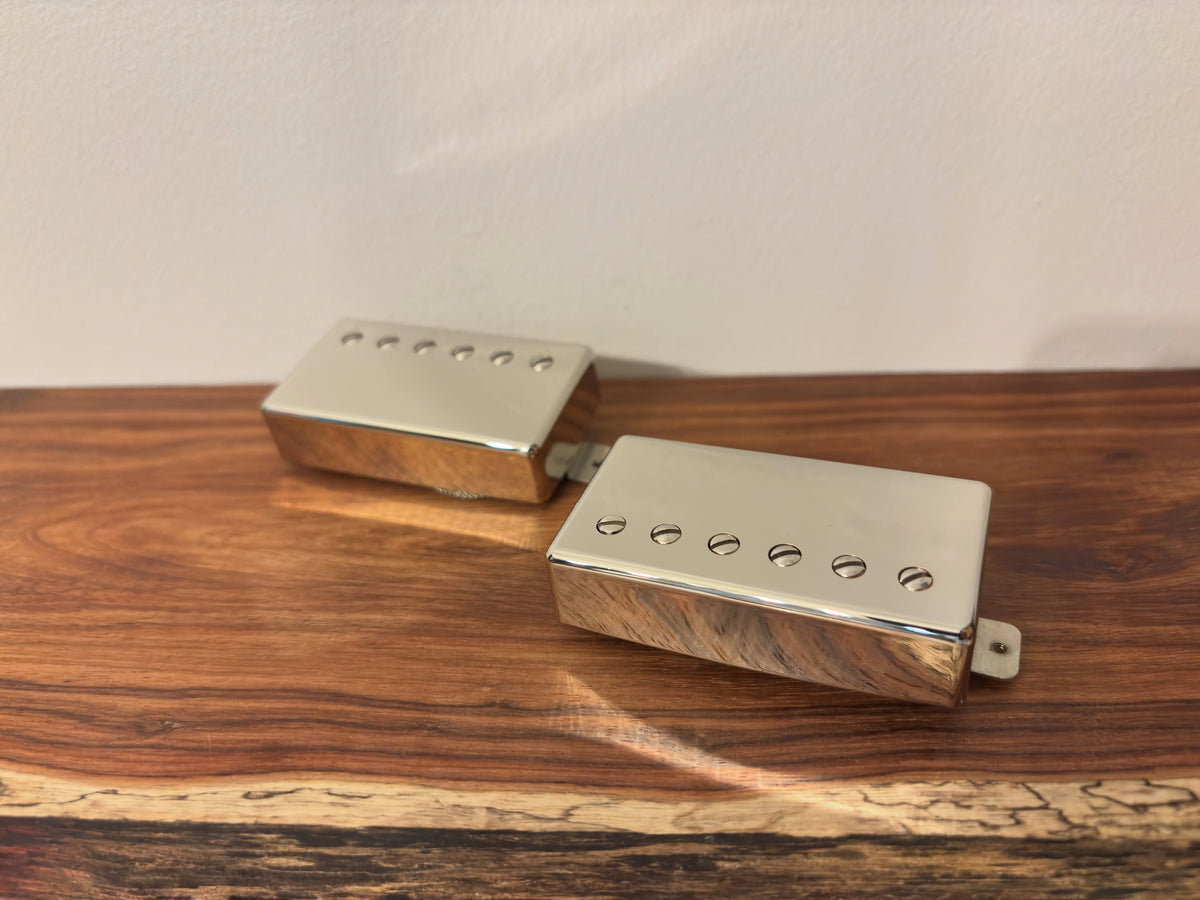
A guitar that suddenly sounds weak, thin, or noticeably quieter can make a perfectly good rig feel broken. Before replacing anything, learn how to restore pickup output by working from the simplest parts of the signal path toward the electronics inside the guitar. More often than not, the pickup itself is not the guilty party.
A passive pickup is a fairly tough component. It has no battery, no active circuitry, and no moving parts beyond the magnetic field interacting with the strings. Cables fail, jacks loosen, switches oxidize, solder joints crack, and volume pots wear out far more often than a properly made coil simply stops producing signal. A calm diagnosis can save you money and keep a guitar sounding like itself.
Start Outside the Guitar
Before opening a control cavity, plug straight into an amp with a cable you know is good. Skip pedalboards, wireless units, buffers, and multi-effects for this test. Set the amp clean enough that you can clearly hear changes in level and clarity.
Try another cable even if your usual one looks fine. A cable can pass some signal while still losing top end, dropping level, or cutting out when it moves. Then try a different amp input or a second amp if one is available. It sounds basic, but ruling out the external chain first prevents a lot of unnecessary soldering.
If you have an active guitar or bass, replace the battery before doing anything else. A tired battery does not always make the instrument go fully silent. It can cause weak output, distortion, intermittent sound, or a strangely dull response. Check that the battery clip is gripping firmly and that the stereo output jack is switching the battery connection correctly when a cable is inserted.
Now compare pickup positions. Is every pickup weak, or is the problem isolated to the neck, middle, bridge, or one side of a humbucker? That answer narrows the job quickly. If all positions are quiet, the issue is usually shared wiring, the output jack, a volume pot, or the cable. If only one selection is affected, focus on that pickup and its path through the switch.
Check the Controls Before Blaming the Pickup
Turn the volume control slowly from zero to full. Listen for scratchiness, dropouts, or a spot where the signal suddenly jumps back to life. Do the same with the tone control. A dirty or failing pot can load the pickup heavily enough to make it sound darker and lower in output than it should.
Work the selector switch through every position several times. Crackling, cutting out, or a pickup returning only when you hold the switch a certain way points toward oxidized or worn switch contacts. A small amount of electronics contact cleaner can help, but use the right product and use it sparingly. Do not soak the cavity, and do not use general-purpose lubricants that leave residue behind.
The output jack deserves the same attention. Plug in a cable and gently move the plug. If the signal crackles or disappears, the jack contacts may be dirty, loose, or no longer gripping the plug tip correctly. A loose jack can also twist inside the body and stress the solder connections. Tighten the exterior hardware while holding the jack from inside when possible, so you do not rotate and break its wiring.
A control issue can feel exactly like a weak pickup. That is especially true when a volume pot has a poor ground connection or a tone capacitor has failed in a way that drags down the signal. The good news is that these are usually straightforward repairs, and the original pickup gets to stay in the guitar.
How to Restore Pickup Output at the Source
Once the cable, amp, jack, switch, and controls have been checked, look at the pickup itself. Start with height. Pickup magnets sense string movement, so a pickup set too low can sound underpowered even though it is electrically healthy.
Fret the outer strings at the highest fret and raise the pickup gradually, a little at a time, while listening through your normal rig. There is no universal measurement that beats using your ears, because string gauge, fret height, magnet type, and playing attack all matter. Bring the pickup close enough to gain fullness and response, then back it away if the notes start to warble, choke, or lose sustain.
Strat-style single-coils are particularly sensitive to being set too close. Strong magnetic pull can create odd intonation behavior often called stratitis. Humbuckers can usually sit closer, but too much height can make the attack feel hard and congested. With bass pickups, balance between strings matters as much as raw level. Adjust the bass and treble sides independently until the instrument speaks evenly.
If the output is weak only when one coil of a humbucker is selected or split, inspect the wiring scheme before assuming the pickup is defective. Coil splits are intentionally lower in output than full humbucker mode. A partial split, resistor split, or parallel wiring may retain more body, but it will not match the full series humbucker level. That is normal behavior, not necessarily a fault.
Inspect the Wiring Carefully
With the guitar unplugged, remove the control cover or pickguard and inspect the solder work under good light. You are looking for a wire that has come loose, a dull or cracked solder joint, a pinched lead, or bare wire touching a neighboring connection. A cold solder joint can pass signal intermittently or add resistance that leaves a pickup weak and unreliable.
Pay close attention to the pickup leads where they enter the control cavity. Repeated pickguard removal, pickup-height adjustments, or a rotating output jack can fatigue a wire over time. On vintage-style cloth push-back wire, the exposed conductor should not be frayed or touching another lug. On shielded cable, confirm that the hot conductor and shield have not shorted together.
If you own a multimeter and are comfortable using it, a resistance reading can offer useful clues. Disconnecting the pickup from the circuit is best for an accurate reading, though experienced techs can sometimes interpret readings in place. A reading that is reasonably close to the pickup's expected DC resistance suggests the coil is likely continuous. An infinite reading often means an open coil or broken connection. A reading close to zero may indicate a short.
DC resistance is not a tone rating, and it does not tell the full story of output. Magnet strength, coil geometry, inductance, wire gauge, and the rest of the circuit all shape what you hear. Still, the meter is valuable as a basic health check.
When the Pickup Needs Repair or Rewind
A truly dead or damaged pickup can often be repaired, but the right repair depends on what failed. A broken lead wire or failed connection at the eyelets may be a simple bench fix. A coil break deeper in the winding usually calls for a rewind. Corrosion, physical impact, heat damage, or an old potting issue can also create intermittent behavior that deserves a closer look.
Do not start peeling tape off a pickup or scraping at delicate coil wire unless you are prepared to rewind it. The wire in many guitar pickups is extremely fine, and one careless tug can turn a minor connection repair into a full coil failure. Vintage pickups deserve even more caution, since original windings and materials can carry real musical and collector value.
A rewind is not automatically a downgrade. Done thoughtfully, it can bring a pickup back to life while respecting its intended voice. The trade-off is that a rewind changes the pickup from fully original to restored, which matters more on some vintage instruments than others. For a working guitar that you love to play, a stable, musical, properly voiced pickup is usually more valuable than one that lives in the case because it is silent.
If you are considering a rewind or a replacement, describe the guitar, the current wiring, the pickup position, the amp, and what feels missing. “More output” may really mean more midrange, less treble loss, tighter bass, better volume balance, or a bridge pickup that keeps up with a fuller neck pickup. Those are different jobs, and they do not all require a hotter wind.
Keep the Guitar’s Natural Voice in the Picture
A pickup replacement should be the last step in restoring output, not the first. Stock pickups are sometimes the limitation, especially when a bridge sound is thin, a neck position is muddy, or a split humbucker is too weak for the way you play. But a great replacement pickup cannot correct a failing jack, a bad pot, or a switch contact that is barely hanging on.
When the electronics are healthy, pickup height is dialed in, and the guitar still is not giving you the response you want, that is the right time to think about a different voice. A hand-wound pickup can be tailored around the instrument instead of forcing the instrument into a generic spec sheet. Pegcity Pickups approaches that conversation from the guitar outward: what the wood and hardware already do well, what your amp emphasizes, and where you need the notes to land.
Give the signal path a patient, methodical check before reaching for a new pickup. The best repair is often a clean contact, a solid solder joint, or a few turns of a height screw - and the reward is hearing your own guitar come back to life.


Leave a comment
This site is protected by hCaptcha and the hCaptcha Privacy Policy and Terms of Service apply.