
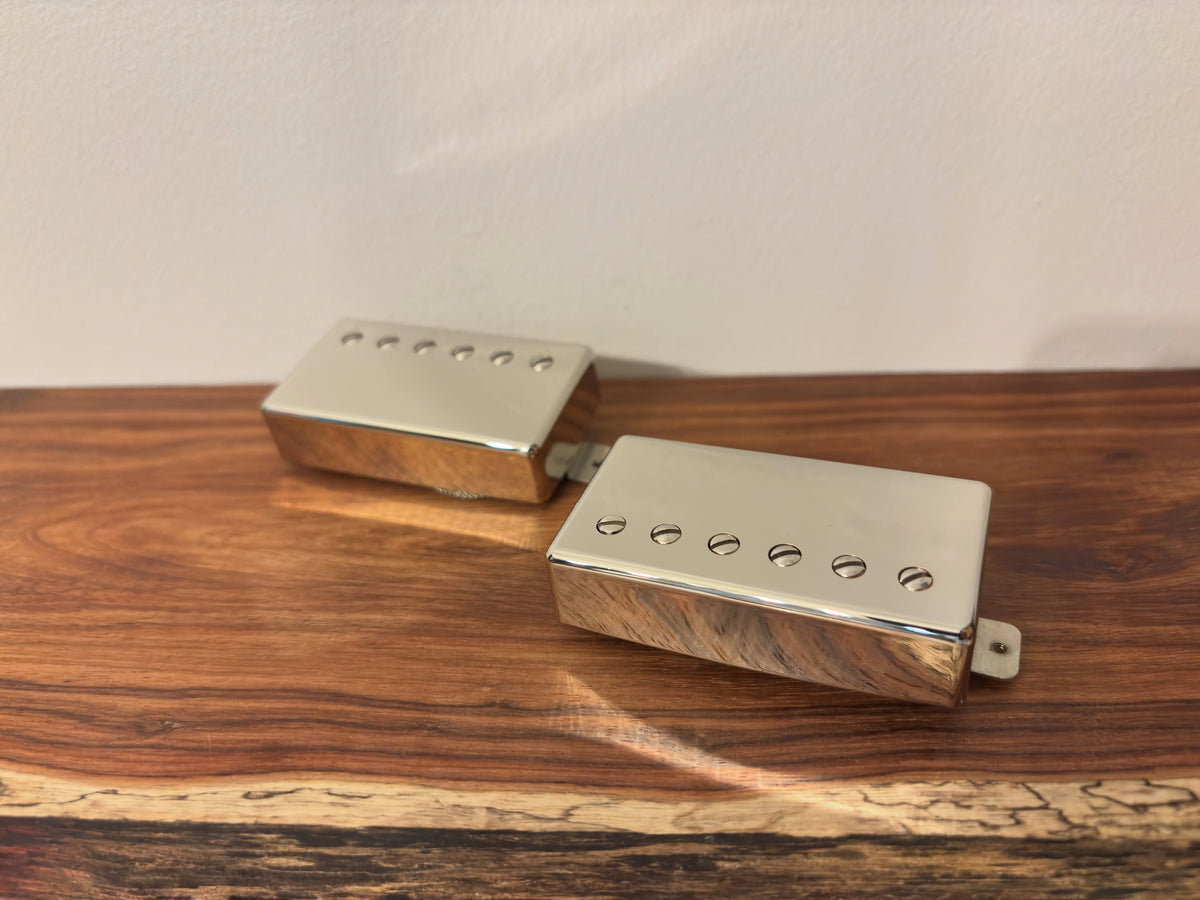
A pickup can sound like the missing piece in a guitar, but only if it actually belongs in the instrument. Before ordering, the first question is practical: will pickups fit your guitar without routing, drilling, new hardware, or a wiring headache? The answer is often yes, but “same style” does not always mean drop-in.
A Strat-style single-coil will not automatically fit every Strat-style guitar. A humbucker-sized pickup may have different mounting tabs, cover dimensions, or screw spacing than the one already in the cavity. And a P-90 is not simply a P-90 when one guitar uses a soapbar and another uses a dogear. A few minutes with a ruler, a screwdriver, and a clear look under the pickguard can save a lot of frustration.
Will Pickups Fit? Start With the Pickup Route
The pickup route is the cavity in the body beneath the pickup. It tells you what can physically sit inside the guitar, but it is only one part of the fitment story.
Start by loosening or removing the strings, then lift the pickguard or pickup carefully enough to inspect the cavity. You are looking at its length, width, and depth, as well as where the mounting screws land. Take clear measurements in millimeters or inches and compare them with the dimensions of the replacement pickup.
A larger route can make life easy. Many guitars routed for a full humbucker can accept a humbucker, a P-90-sized humbucker, or certain rail and blade designs without changing the body. But a traditional single-coil route is narrower, and a standard humbucker will not fit unless the body is routed or the guitar has a more generous “swimming pool” cavity under the pickguard.
Do not assume a pickguard tells the whole story. A guitar may have a humbucker-shaped opening in the guard with a single-coil-sized route underneath. The reverse can also happen on modified instruments. Check the wood, not just the plastic.
Depth Matters More Than Players Expect
Pickup cavities also need enough depth for the pickup, mounting hardware, springs or tubing, and room to adjust pickup height. This is especially relevant on guitars with shallow routes, carved tops, or designs where a pickup mounts directly to the body.
Tall vintage-style single-coils, covered humbuckers, and some bass pickups may need more room than a shallow factory cavity provides. If the pickup bottoms out before it reaches a usable height, it may technically fit the route but will not perform as intended. You want enough adjustment range to balance output, sustain, attack, and string pull.
Match the Mounting Style, Not Just the Shape
Two pickups can share an outline and still mount completely differently. This is one of the most common reasons a supposedly easy swap turns into a bench project.
Standard humbuckers typically use mounting tabs on either side of the bobbins and install into a pickup ring, pickguard, or mounting bracket. Some direct-mount humbuckers use screws that pass through the pickup into the body. The pickup itself may look similar, but its tabs, screw locations, and required hardware can differ.
Single-coils also vary. Traditional Strat-style pickups commonly use two mounting screws through the flatwork. Telecaster neck pickups may mount to the pickguard or to the body, while bridge pickups mount through a bridge plate with their own screw pattern. A Tele bridge pickup is not interchangeable with a Strat bridge pickup, even when both are single-coils.
P-90s deserve extra attention. Soapbar P-90s mount through the cover, with screws positioned between the pole pieces. Dogear P-90s use raised “ears” on the cover and mount on top of the guitar. Their baseplates, heights, and mounting approach are different. Swapping one for the other often requires more than changing a cover.
If you are replacing a covered pickup, measure the cover too. A pickup can fit the wood route but still bind against a tight pickguard opening or a pickup ring that was made for a slightly different format.
Check String Spacing Before You Choose
Physical fit is only half the job. The poles, blades, or sensing area need to line up sensibly with the strings.
For traditional exposed-pole pickups, bridge spacing matters most. Strat-style bridge pickups and humbuckers are often available in narrow and wide spacing options. A wider-spaced bridge can place the outer strings farther apart than a narrow-spaced pickup was designed for. The mismatch may not always be dramatic through an amp, especially with strong magnetic fields, but it can look wrong and occasionally affect string-to-string balance.
Measure from the center of the low E string to the center of the high E string directly above the pickup location. Do this at the bridge position, where spacing is widest. Then compare that number to the replacement pickup’s stated pole spacing.
Blade pickups are more forgiving because the blade senses across a continuous area rather than at six individual pole pieces. They can be a smart choice for guitars with unusual spacing, wide vibrato bridges, or players who bend strings aggressively. The trade-off is tonal, not just practical. A blade design has its own attack, compression, and magnetic feel, so choose it because you like what it does, not only because it removes a measurement.
Confirm What Is Under the Pickguard
Many modern guitars are built with flexible routes that allow several pickup configurations. A guitar with an HSS pickguard, for example, may have enough room for a full humbucker at the bridge, a single-coil-sized humbucker, or a traditional single-coil. But there are no guarantees.
Take a look for shielding paint, copper tape, wood ledges, braces, and wire channels that may affect the available room. On a semi-hollow or hollowbody, the job can be more involved because access through an f-hole is limited and the wiring harness may need to be handled as a complete assembly. A pickup may fit physically, yet installation can still require patience and proper tools.
Bass players should be equally careful. Jazz Bass, Precision Bass, Music Man-style, soapbar, and narrow blade pickup formats are not interchangeable just because they occupy a similar area of the body. Measure the cavity, the screw locations, and the pickup cover dimensions. Bass pickup fitment is particularly model-specific.
Wiring Compatibility Is a Separate Question
A pickup can fit the guitar perfectly and still need a little planning at the controls. Most passive pickups can be wired into most passive guitars, but output level, magnet type, coil count, and lead configuration all influence the best wiring approach.
A vintage-output single-coil usually works happily with 250k pots, while many humbuckers are commonly paired with 500k pots to retain clarity. That is not a law. Plenty of great guitars break the rule. Still, if you install a warmer pickup into a guitar with darker electronics, the result may be more woolly than you hoped.
Four-conductor humbuckers open up options for coil splits, series/parallel wiring, and phase switching. But those options require the right switch or push-pull pot, plus enough cavity room for the hardware. If you want strong split tones, say so before choosing a pickup. Not every humbucker is voiced to sound equally convincing when one coil is taken out of the circuit.
Active pickups are their own category because they need a battery and usually use different pots. They can fit the route but require battery space and a more substantial wiring change.
When Modification Makes Sense
Routing a guitar is not automatically a bad idea. A well-planned modification can turn an underused instrument into a forever guitar. The key is being honest about the instrument, the goal, and the permanence of the change.
On a common production guitar, routing for a bridge humbucker, installing a new pickguard, or converting to a different pickup format can be a worthwhile upgrade. On a vintage, collectible, or highly original instrument, irreversible changes deserve more caution. Sometimes a humbucker-sized P-90, a single-coil-sized humbucker, or a custom-voiced replacement is the smarter path because it gets you closer to the tone you want while preserving the guitar.
This is also where a conversation helps. Pegcity Pickups can help players and builders sort out format, spacing, mounting, polarity, and the tone they are chasing before a pickup reaches the workbench.
Measure First, Then Chase the Tone
The best replacement pickup should feel like it was meant for your guitar: it should sit correctly, adjust correctly, line up with the strings, and bring out more of what you already love about the instrument. Grab a ruler, inspect the cavity, and take a few photos before making your choice. That small bit of workshop homework leaves you free to focus on the good part - plugging in and hearing your guitar come alive.


Leave a comment
This site is protected by hCaptcha and the hCaptcha Privacy Policy and Terms of Service apply.