
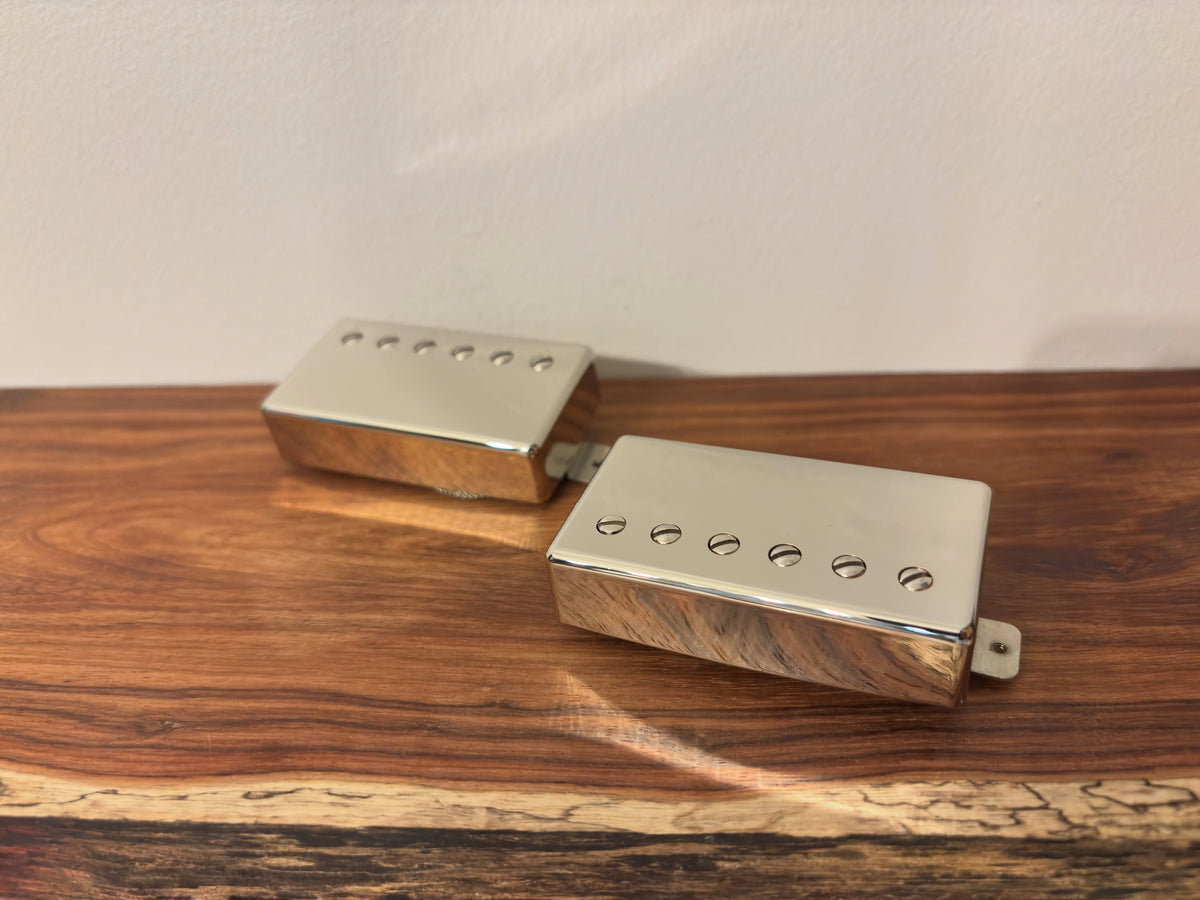
A pickup guide should not start with a spec sheet. It should start with the guitar in your hands. Maybe the neck position goes woolly when you add gain. Maybe the bridge pickup has plenty of bite but no weight, or your favorite overdrive suddenly turns harsh and thin. Those are useful clues. The right pickup is not simply the hottest, the most vintage, or the most expensive option. It is the one that lets your instrument respond the way you want it to.
Pickups are a major part of the signal path, but they are not a magic eraser for every tonal issue. Your guitar’s wood, construction, bridge, strings, pots, cable, amp, speakers, and hands all matter. A good pickup choice works with those elements rather than fighting them. That is where a little context beats chasing a famous spec.
A Pickup Guide Starts With the Guitar
Before choosing a replacement, listen honestly to what is already there. Play the guitar clean, then through the gain sounds you actually use. Try the neck, middle, bridge, and in-between settings at rehearsal volume if possible. Pay attention to the low strings, because excess bass can make an otherwise good pickup seem dull or undefined.
Describe the problem in plain player language. “My bridge pickup feels small next to the neck.” “My neck humbucker gets muddy with chords.” “I want my Tele to stay twangy but stop taking my head off.” These observations are more valuable than saying you need a certain DC resistance number.
The guitar itself sets the starting point. A bright, lightweight bolt-on may welcome a fuller pickup with a rounded top end. A dark, dense single-cut guitar may benefit from extra openness and a tighter low end. Two instruments with the same factory model name can still need different pickup choices. That is normal, not inconvenient.
Also consider what you love about the guitar. If its acoustic voice is lively and percussive, a pickup that preserves note separation may be a better fit than one designed to compress everything into a thick wall of sound. If it already has a warm, vocal quality, you may only need a clearer bridge position instead of an entire overhaul.
Output Is Feel, Not Just Volume
Players often use “high output” as shorthand for power, but output affects more than loudness. A higher-output pickup generally pushes the front of an amp or pedal harder. It can feel thicker, more compressed, and more immediate under gain. That can be exactly right for heavy rhythm work, sustain-focused leads, or an amp that needs a firmer shove.
The trade-off is that more output can reduce some of the open, dynamic edge players associate with lower-wind designs. A lower-output pickup often leaves more room around the note. It can clean up beautifully from the guitar’s volume knob, retain chord detail, and let the amp do more of the work. For players who live in edge-of-breakup tones, that response is often the whole point.
Neither approach is automatically better. A vintage-voiced PAF-style humbucker can handle plenty of gain with the right amp, while a hotter humbucker can still be articulate when its wind, magnet, and voicing are balanced well. The useful question is this: do you want the pickup to supply more of the push, or do you want more room to control the push with your hands and guitar controls?
Output balance between positions deserves attention too. A bridge pickup does not need to measure exactly the same as a neck pickup to feel balanced. Bridge strings move less, so bridge pickups are commonly wound differently to keep up. What matters is whether switching positions feels musical and practical on your rig.
Magnet Choice Shapes the Attack
Magnets are part of why two pickups with similar output can feel very different. They influence attack, bass response, treble character, and the sense of pull on the strings.
Alnico magnets are common in guitar pickups and cover a wide tonal range. Alnico II is often associated with a softer attack, sweeter highs, and a forgiving feel. It can be a great match for guitars that are naturally sharp or aggressive. Alnico V tends to bring a firmer low end, more immediate attack, and a stronger, more energetic response. It is popular when a player wants clarity and punch without moving into ceramic territory.
Ceramic magnets can provide a focused, forceful sound with tight lows and a pronounced attack. They are not automatically harsh, just as Alnico is not automatically warm. The overall design matters. A well-built ceramic pickup can be articulate and controlled; a poorly matched vintage-style pickup can be shrill or muddy regardless of magnet type.
For bass, the same principle applies with even more consequence. A pickup that sounds huge alone may crowd the low mids once drums and guitars enter. The goal is usually authority with definition: enough fundamental to support the band, enough midrange to be heard, and enough top end to communicate fingerstyle, pick attack, or slap without turning brittle.
Single-Coils, Humbuckers, and the Middle Ground
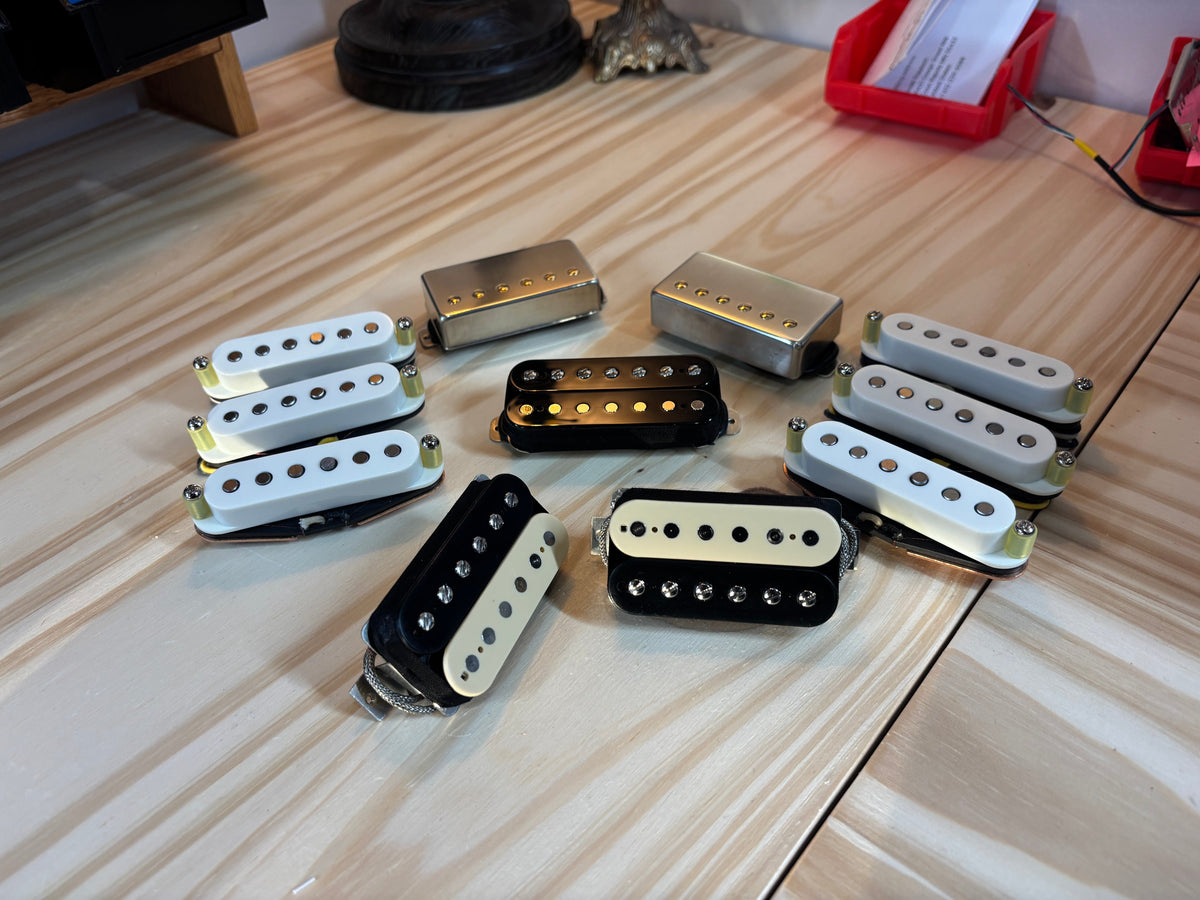
Pickup format should follow the sound and the job, not a list of internet rules. Traditional single-coils bring quick attack, clarity, and a sense of air around the note. They can make clean parts feel alive and help driven chords stay separated. Their familiar drawback is hum, especially around lighting, screens, and noisy stages.
Humbuckers cancel much of that noise and usually offer a thicker midrange profile with more sustain and drive. They are a natural fit for rock, blues, heavier music, and players who want a broad, confident lead sound. But a humbucker does not have to be dark or congested. The best match may be an open, lower-output design that retains the guitar’s personality rather than covering it up.
P-90-style pickups sit in a compelling middle ground. They have single-coil immediacy, strong mids, and a raw edge that can make a plain amp sound exciting. They also have noise, and their broad coil can react differently than either a Strat-style single-coil or a humbucker. If you want touch sensitivity, grit, and authority without the polished feel of many humbuckers, they are worth serious consideration.
There are also rail designs, stacked coils, split-coil arrangements, and noiseless options. These can solve real problems, particularly for working players. Just be clear about the priority. If silent operation is non-negotiable, choose a design made for it rather than expecting a traditional single-coil to behave like a hum-canceling pickup.
Wiring Can Make a Good Pickup Better
A pickup swap is the right time to look at the controls. Pot values, capacitor choices, switching, and wiring condition all affect what reaches the output jack. A bright pickup paired with the wrong pot value can become unnecessarily sharp. A darker pickup may wake up with a change that allows more high end through.
Coil splits deserve realistic expectations. Splitting a humbucker can be useful, especially for cleaner rhythm sounds and extra colors on a cover gig. But a split humbucker is not automatically a replacement for a purpose-built single-coil. The coil geometry, magnet structure, and placement are different. A well-designed partial split or parallel wiring option often gives a more usable result than a thin, dramatic full split.
For Strat-style guitars, reverse-wound, reverse-polarity middle pickups can provide hum cancellation in positions two and four. For Telecasters, thoughtful neck and bridge pairing can preserve the classic contrast between warmth and bite without leaving one position noticeably weaker. Small decisions like these make a guitar easier to use on a real session or stage.
Choose for the Music You Actually Play
It is tempting to shop for the pickup used by a favorite artist, but their rig may include a very different guitar, amp, speakers, effects chain, tuning, string gauge, and volume level. Their sound can be a useful reference, not a blueprint.
Instead, think in terms of the sounds you need to cover. Worship players may prioritize clarity under ambient effects and drive pedals. A country player may need fast attack, controlled highs, and a bridge tone that cuts without becoming ice-picky. A hard rock player may want tight palm-muted lows and enough mids to keep leads from disappearing. A recording guitarist may favor lower-output pickups that layer well and reveal dynamics.
If you play several styles, versatility often comes from balance rather than maximum output. A clear neck pickup, a bridge pickup with enough body, and useful control wiring can take one guitar much farther than an extreme set built for only one sound.
When Custom Voicing Makes Sense
Custom work becomes valuable when your needs are specific: an unusually bright instrument, a nonstandard pickup route, a favorite pickup that needs a better-matched partner, a left-handed build, a special polarity requirement, or a tone goal that sits between common production models. It is also a strong option for builders who want a consistent voice across their instruments without making every guitar sound identical.
This is where a direct conversation saves time. Share the guitar model, wood and bridge style, current pickups, pot values if known, amp, pedals, tuning, strings, genre, and the words you use to describe the problem. A builder can work with that. “I need better tone” is honest, but “the low E blooms too much under gain and the bridge gets brittle above the 12th fret” gives a much clearer target.
At Pegcity Pickups, that player-to-builder exchange is part of the work. Hand-wound pickups are not about sprinkling boutique dust on a guitar. They are about making careful choices in winding, components, magnets, and matching so the finished instrument feels more like yours.
Give yourself permission to choose the pickup that serves the guitar, not the trend. When the right one is in place, you stop thinking about what is missing and start reaching for that instrument first.

Leave a comment
This site is protected by hCaptcha and the hCaptcha Privacy Policy and Terms of Service apply.