
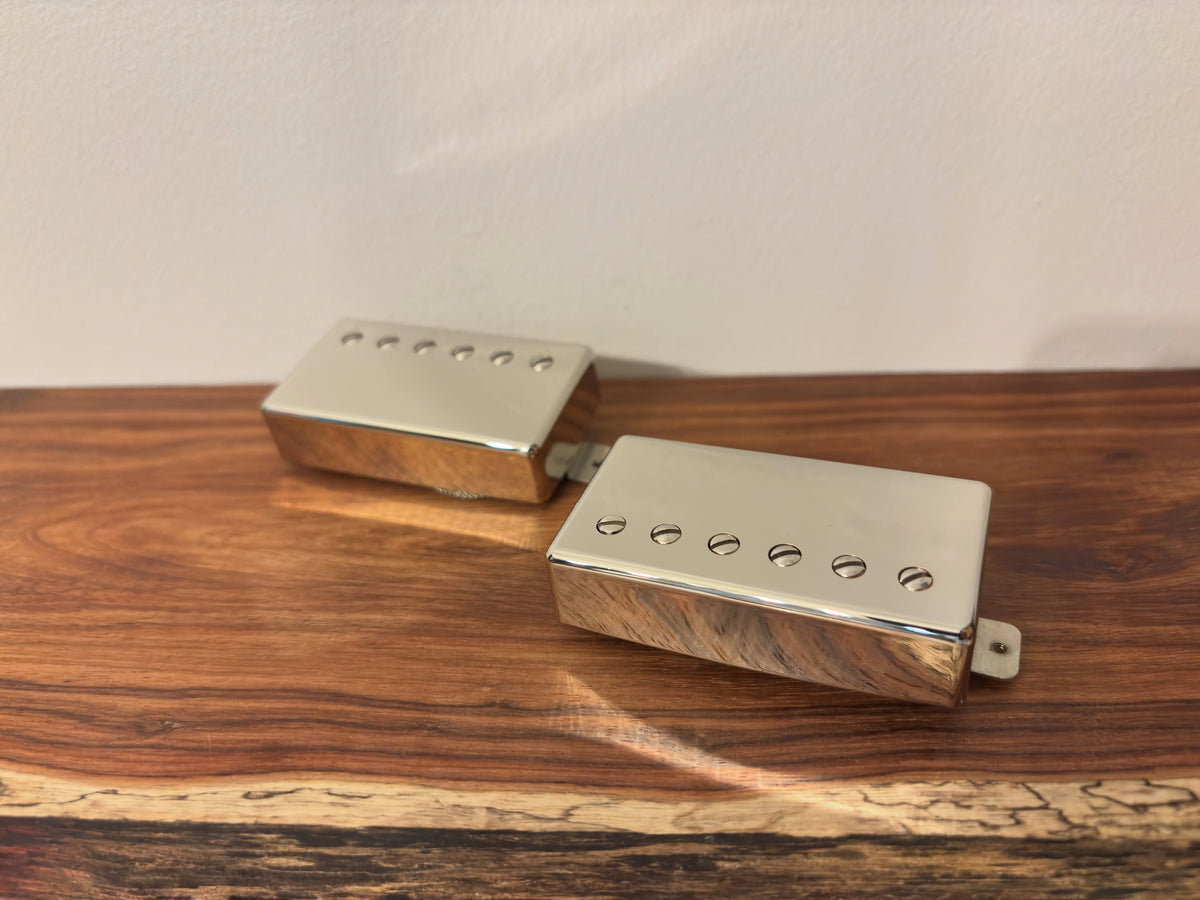
A great set of single coils does not turn every guitar into the same guitar. It should let your instrument speak more clearly: the snap of the pick, the woody low end, the hollow character in the in-between settings, and the way a clean chord opens up when you ease off your volume knob. That is why a pickup swap can make a familiar guitar feel like a guitar you want to play again.
Single-coil tone is often reduced to a few quick labels: bright, vintage, noisy. There is some truth in all three, but those labels leave out the good stuff. The right set can be articulate without being thin, lively without being harsh, and clear enough for pedals without losing its personality.
What Makes Single Coils Sound Different?
A traditional single-coil pickup uses one coil of wire around magnetic pole pieces or a magnet structure. When the strings move through that magnetic field, the coil turns those vibrations into an electrical signal. Simple concept, huge range of possible results.
The coil itself is a major part of the voice. Wire gauge, turn count, winding tension, scatter, and the shape of the coil all influence output, resonant peak, compression, and high-end response. A lower-wind pickup usually has more openness and top-end sparkle. A hotter wind can push an amp harder, add midrange body, and take some of the sharp edge off the top.
Magnets matter just as much. Alnico types have different strengths and feel under the fingers, while pole-piece geometry and magnetic charge affect string balance and attack. Then there is the guitar around the pickup: its woods, bridge, hardware, electronics, scale length, strings, and setup all have a say. That is why copying a famous pickup spec does not always deliver the exact sound you heard on someone else’s record.
The Tone You Feel Matters as Much as the Specs
Players often come looking for more output when the real problem is a lack of clarity. Others think they need a brighter pickup when their bridge position is really suffering from poor height adjustment or overly aggressive pots and capacitors. Good pickup selection starts with the guitar in your hands and the sound you want more of.
A neck pickup should not turn chords into a blanket. It can be warm and full while still separating notes in a complex voicing. A bridge pickup does not need to be ice-picky to cut through a loud band. The best bridge tones have enough upper-mid detail to stay present, plus enough body that leads feel substantial instead of brittle.
The middle pickup is often overlooked, but it does a lot of work. On its own, it can be one of the most balanced voices in a Strat-style guitar. Combined with the neck or bridge, it creates those familiar scooped, glassy positions that work beautifully for clean rhythm, funk, ambient parts, and edge-of-breakup sounds.
Vintage output versus hotter winds
Vintage-voiced single coils tend to preserve more string-to-string detail and dynamic range. They respond quickly to pick attack and clean up beautifully through a responsive amp. For players who live on the guitar’s volume control, that can be the whole point.
Hotter single coils can be a smart choice for a guitar that needs more push, thicker lead tones, or a bridge position that feels underpowered next to a humbucker-equipped guitar. The trade-off is that more wind generally means a little less open top end and a more compressed feel. Neither approach is automatically better. A country player chasing fast, percussive Tele response may want something very different from a rock player who needs a Strat bridge pickup to carry a high-gain solo.
Choosing Single Coils for Your Guitar
Start by identifying what your current pickups do well. If you like the acoustic character of the guitar but find it flat through an amp, you probably want a pickup that reveals more of that existing voice. If the neck position is muddy, look for improved note separation and a tighter low end rather than simply shopping by DC resistance.
For a Strat-style guitar, consider the balance across all five positions. A set should feel like one instrument, not three unrelated pickups. Many players benefit from a slightly stronger bridge pickup because bridge-string movement is naturally smaller than it is at the neck. A well-matched bridge wind can add authority without making positions two and four sound awkward or mismatched.
For a Tele-style guitar, the bridge pickup is its own category. The baseplate, coil geometry, and magnet recipe all shape that famous combination of twang, grind, and punch. The neck pickup deserves equal attention. A great Tele neck tone can be round and jazzy, but it should retain enough clarity to make it useful outside of mellow comping.
Pickup height belongs in this conversation too. Set a pickup too close to the strings and strong magnets can pull on the strings, causing odd warbling, reduced sustain, or a harsh attack. Too low, and the guitar can feel weak and disconnected. Before deciding a pickup is not right for you, spend time adjusting height by ear, with the amp and gain level you actually use.
Noise Is Real, but It Is Not the Whole Story
Traditional single coils pick up electromagnetic interference. Lights, dimmers, computer screens, old wiring, and crowded stages can all add hum. It is part of the design, and it can be frustrating when the environment is bad.
That said, noise does not mean you have to abandon the sound you love. A reverse-wound, reverse-polarity middle pickup gives hum cancellation in the combined positions of a three-pickup guitar. Proper shielding, clean grounding, quality cables, and sensible stage setup can make a meaningful difference too.
Noiseless designs offer another route. They can be excellent for high-gain rigs, studio work, worship stages, and any situation where quiet operation is non-negotiable. But they are not automatically a replacement for a traditional single coil. Some players hear and feel a difference in openness, attack, and harmonic texture. The right choice depends on how much noise you face, how much gain you use, and which response makes you want to keep playing.
Wiring Can Change the Conversation
A pickup is only one part of the circuit. Pot values, capacitor choices, switch wiring, and treble-bleed networks can all shift how a set behaves. A 250k volume pot is common with single coils because it helps keep the high end in check. If a guitar sounds dark or dull, though, the answer may not be a brighter pickup. It may be a pot that is reading low, a tired component, or wiring that is loading the signal more than expected.
Useful switching can make a good guitar more flexible without crowding it with gimmicks. A neck-and-bridge combination on a Strat-style guitar provides a wide, almost Tele-like rhythm sound. Series wiring can produce a fatter, louder voice for solos. The key is choosing options you will actually use on a gig, not adding switches just because they fit under the pickguard.
Why Hand-Wound Details Are Worth Discussing
Boutique pickup work is not about claiming that every hand-wound coil is magically better. It is about control, consistency, and the ability to make informed adjustments. A builder can tailor wind counts, magnet choices, polarity, output balance, and voicing around the actual guitar and player rather than forcing every instrument into the same catalog spec.
That is especially valuable when your needs are specific. Maybe your ash-body Tele is painfully sharp through a bright amp. Maybe your favorite Strat has a wonderful neck tone but a bridge pickup you never select. Maybe you need a calibrated set for a particular tuning, string gauge, or pedalboard. Those are useful starting points for a real conversation, not problems solved by the loudest marketing claim.
At Pegcity Pickups, the goal is not to erase what makes your guitar yours. It is to build on the parts that are already there and help the instrument deliver more of the response, clarity, and feel you are after.
Let Your Ears Make the Final Call
Specifications are useful, but they cannot tell you how a pickup will react to your pick attack, your amp, and the way you shape a note. Start with the musical problem you want to solve. Describe what feels missing, what sounds great already, and where the guitar lets you down.
The best single coils are not necessarily the brightest, hottest, quietest, or most historically exact. They are the ones that make you stop adjusting knobs, play one more chorus, and trust your guitar when the red light comes on or the band counts in.

Leave a comment
This site is protected by hCaptcha and the hCaptcha Privacy Policy and Terms of Service apply.