
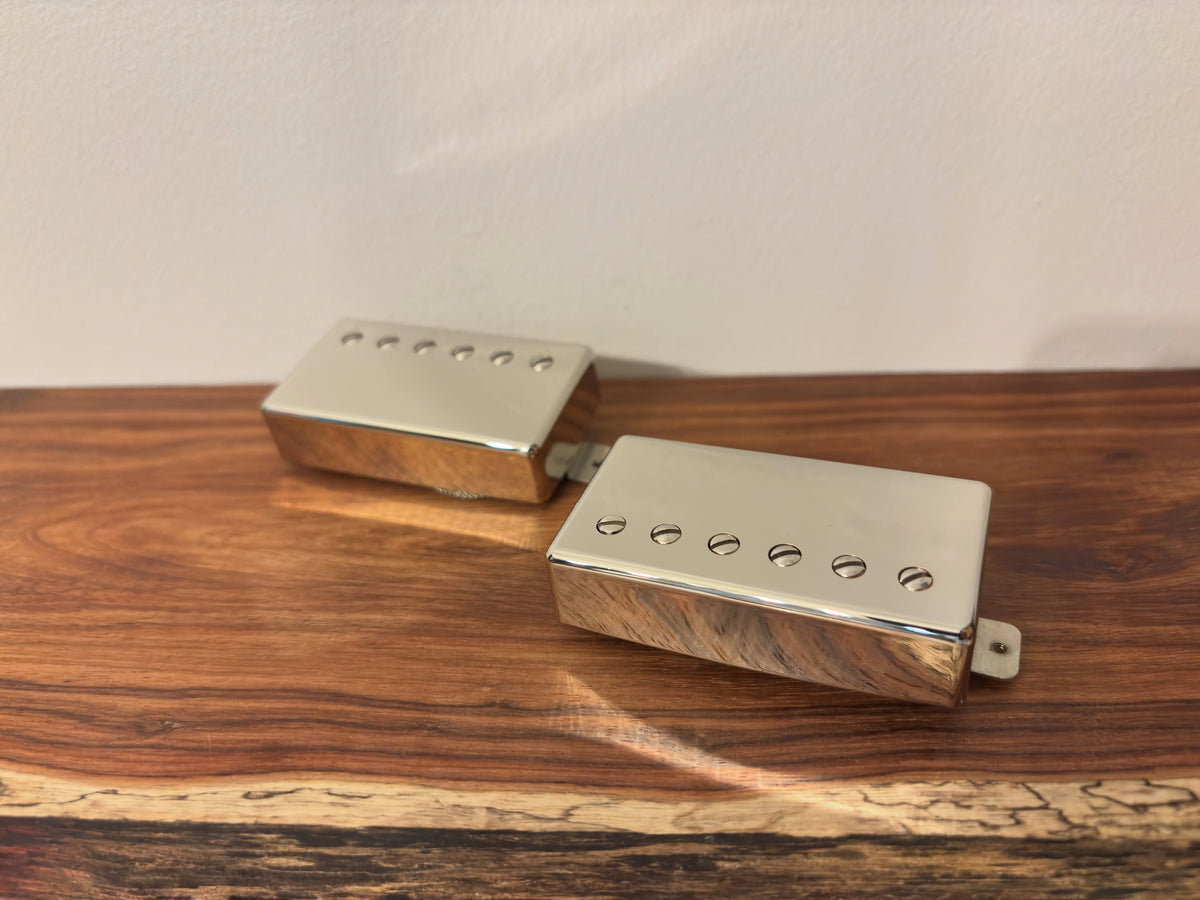
A great custom guitar can be let down in the last inch of the signal path. You can get the neck carve, fretwork, finish, and hardware exactly right, then install pickups chosen from a spec sheet alone and end up with a bridge that barks too hard, a neck tone that clouds up, or a middle position nobody uses. Pickups for custom guitar builders need to be part of the instrument's design from the start, not a final-box item.
The goal is not to force every guitar into the same familiar sound. It is to give the finished instrument a voice that makes sense in the player's hands: clear when they dig in, useful across the controls, and recognizable as that specific guitar.
Start With the Guitar, Not the Pickup Category
Words like "vintage," "hot," and "PAF-style" are useful shorthand, but they are not a complete pickup brief. A pickup responds to the guitar around it. Body wood, neck construction, fretboard material, bridge type, scale length, mass, and even the way the instrument is assembled all influence what reaches the amp.
A bright bolt-on guitar with a hardtail bridge may not need the same bridge pickup as a warmer, heavier set-neck build. Likewise, a semi-hollow with a naturally wide low end can benefit from a neck pickup designed for definition rather than extra warmth. The right question is not simply, "What output should this have?" It is, "What does this guitar already do well, and where does it need help?"
That approach protects the personality of the build. If a guitar has an open, percussive acoustic voice, pickups should let that come through. If the instrument has a strong midrange push, the wind and magnet choice can keep chords from feeling crowded. Good pickup selection is less about correcting a bad guitar and more about making a promising guitar speak clearly.
Pickups for Custom Guitar Builders Need a Real Brief
Before settling on a set, get specific about the player and the intended job. A guitar built for a touring country player, a worship guitarist running stereo delays, and a rock player using a cranked amp may all wear a single-cut body, but they do not need the same response.
A useful builder brief covers the instrument itself, the player's rig, and the desired feel. Consider the scale length, woods, construction, bridge, pot values, and switching plan. Then ask how the player sets their amp, whether they live on clean or edge-of-breakup tones, how much gain they use, and whether they favor heavy picking or a lighter touch.
The most useful tonal descriptions are practical ones. "I need the bridge to stay full without getting sharp." "I want the neck to handle ambient chords without turning to mush." "The split sound needs to be genuinely usable." Those statements point toward a solution more clearly than a request for "high output but vintage."
Output is only one part of the picture. Two pickups with similar DC resistance can feel very different because coil geometry, wire type, magnet grade, magnet charge, and inductance all shape the result. Resistance is a reference point, not a complete tone map.
Match output to response, not just volume
Higher output can make an amp react sooner, add compression, and make the bridge position feel more immediate. That can be exactly right for a player who wants weight and drive. It can also reduce openness if the guitar is already dark or if the player needs maximum note separation under effects.
Lower-output winds often preserve more air and dynamic range. They can feel lively, articulate, and very responsive to picking nuance. But a low-output pickup is not automatically better for clarity, and a hotter pickup is not automatically muddy. The complete design determines whether the pickup stays balanced.
For a matched set, the neck pickup deserves special attention. Neck-position mud is one of the quickest ways to make an otherwise excellent guitar feel limited. A well-voiced neck pickup should have enough body for single notes and clean chords, while keeping the lower strings defined when the player rolls back the tone or adds gain.
Build the Set Around the Wiring Plan
Wiring is not an afterthought. It affects what the player can actually access from the pickups you choose. If the build includes coil splits, series and parallel options, phase switching, or blend controls, talk about those functions before the pickups are wound.
A humbucker that sounds tremendous in full series mode may deliver a weak or overly thin split if its coils were not designed with that use in mind. A partial split resistor can retain more body, while a carefully selected asymmetric coil wind can make the single-coil setting feel more purposeful. Neither approach is universally better. It depends on whether the player wants a convincing alternate voice or simply a little extra brightness on demand.
Pot values matter here too. A 250k volume pot can soften the top end of a bright pickup, while 500k pots generally let more high end through. A builder may choose those values to suit the whole guitar, but they should be considered alongside the pickup voice. Changing pots after the fact can help fine-tune a build, but it is better when the electronics plan and the pickup design are working toward the same result.
For three-pickup guitars, do not treat the middle pickup as filler. The in-between sounds are often where players find their favorite rhythm tones. Polarity and winding direction should be planned for hum-canceling combinations, and the middle output should be balanced so those positions do not disappear or jump too far forward.
Choose Magnets for Feel as Much as EQ
Magnet choice is often described as an EQ decision, but players feel it as much as they hear it. The magnet influences attack, string pull, compression, and the way notes bloom after the initial pick stroke.
Alnico II is often associated with a softer attack and sweeter feel. It can work beautifully when a guitar needs a little roundness or when the player wants the pickup to give under the pick. Alnico V tends to offer a firmer low end and more immediate attack, which can suit guitars that need punch and authority. Other magnet options can bring their own balance of clarity, softness, or midrange character.
Still, there is no simple magnet chart that replaces listening. An Alnico V pickup can be smooth, and an Alnico II pickup can be clear and punchy depending on the rest of the design. Magnet charge is another meaningful variable. A properly calibrated magnet can keep string response even and avoid excessive pull on the wound strings.
Think Beyond the Standard Catalog Set
Standard pickup models are a great starting point, especially when a builder knows the tonal family they want. But custom work becomes valuable when the guitar falls outside the usual lane. Maybe the builder needs an F-spaced bridge humbucker with a slightly leaner low end, a reverse-wound middle for quiet positions, and a neck pickup that stays clean under a high-gain rig. Maybe a bass build needs a familiar vintage foundation with more definition on the B string.
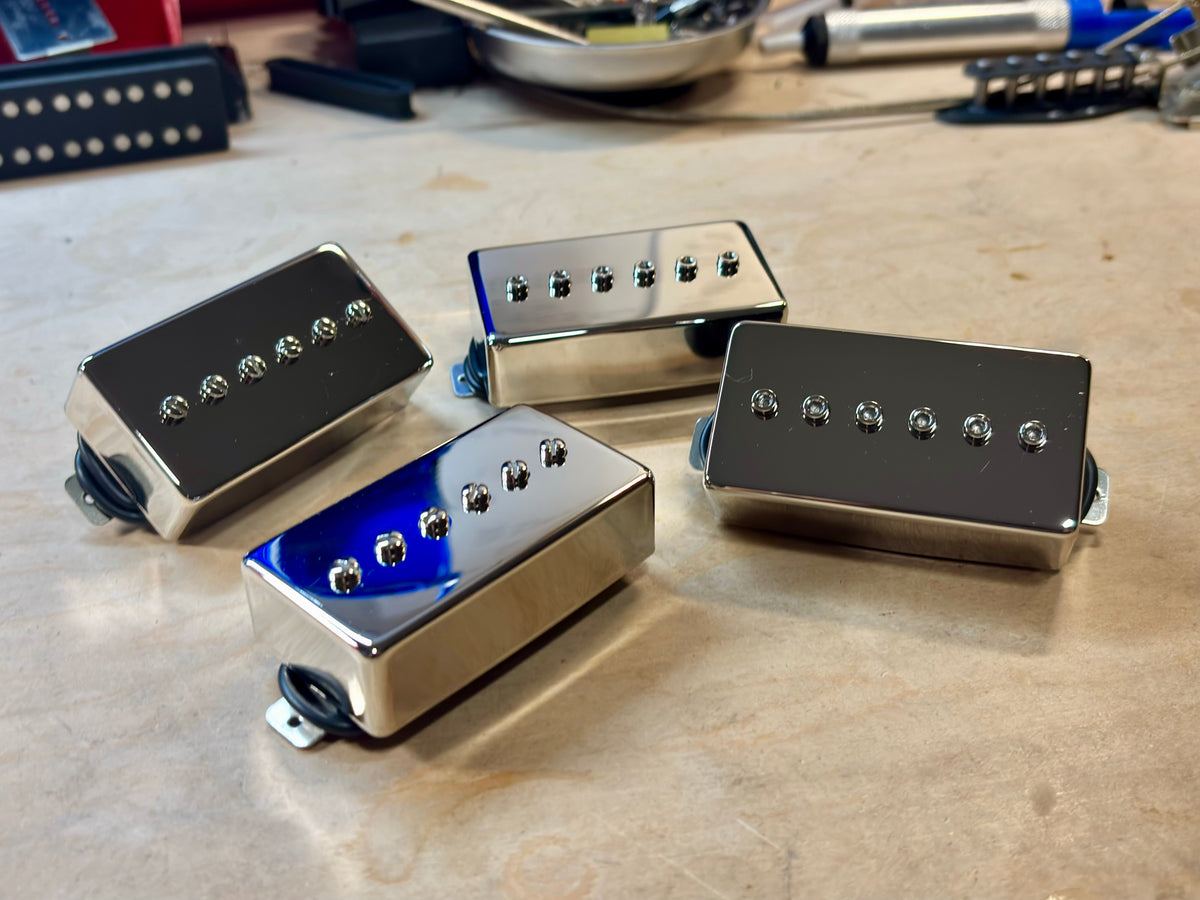
This is where direct conversation matters. A hand-built pickup can be adjusted around coil wind, magnet selection, spacing, cover choice, lead configuration, and polarity. Those details are not gimmicks. They are how a set is made to fit the guitar rather than asking the guitar to fit the set.
At Pegcity Pickups, the best custom orders usually begin with the simple stuff: what the instrument is, what the player hears now, what they wish they heard instead, and how they use the controls. From there, the details become useful rather than overwhelming.
Avoid the Temptation to Overcorrect
Custom builders care deeply about every component, which can make it tempting to chase every possible tonal improvement at once. A brighter pickup, brighter pots, a brighter capacitor choice, and a lighter bridge can stack up into a guitar that feels thin and unforgiving. The opposite can happen when every choice is made to add warmth.
Leave room for balance. A bridge pickup does not need to sound identical to the neck pickup. In fact, it should not. It needs to work in its position, at its string excursion, and for the role the player will ask it to perform. The same goes for output matching. Slight imbalance can be the right answer if it makes the switch positions more useful in the real world.
It also helps to judge pickups at playing volume. A tone that sounds impressive in a quiet workshop can behave differently through a loud amp, with a band, or under a compressor and delay. If possible, test the completed guitar through the kind of rig it was built to serve.
The best pickup choice is the one that makes a player stop analyzing and keep playing. Give the guitar a voice with enough character to inspire them, enough balance to earn its place on a session or stage, and enough honesty to let the craftsmanship of the build come through.


Leave a comment
This site is protected by hCaptcha and the hCaptcha Privacy Policy and Terms of Service apply.