
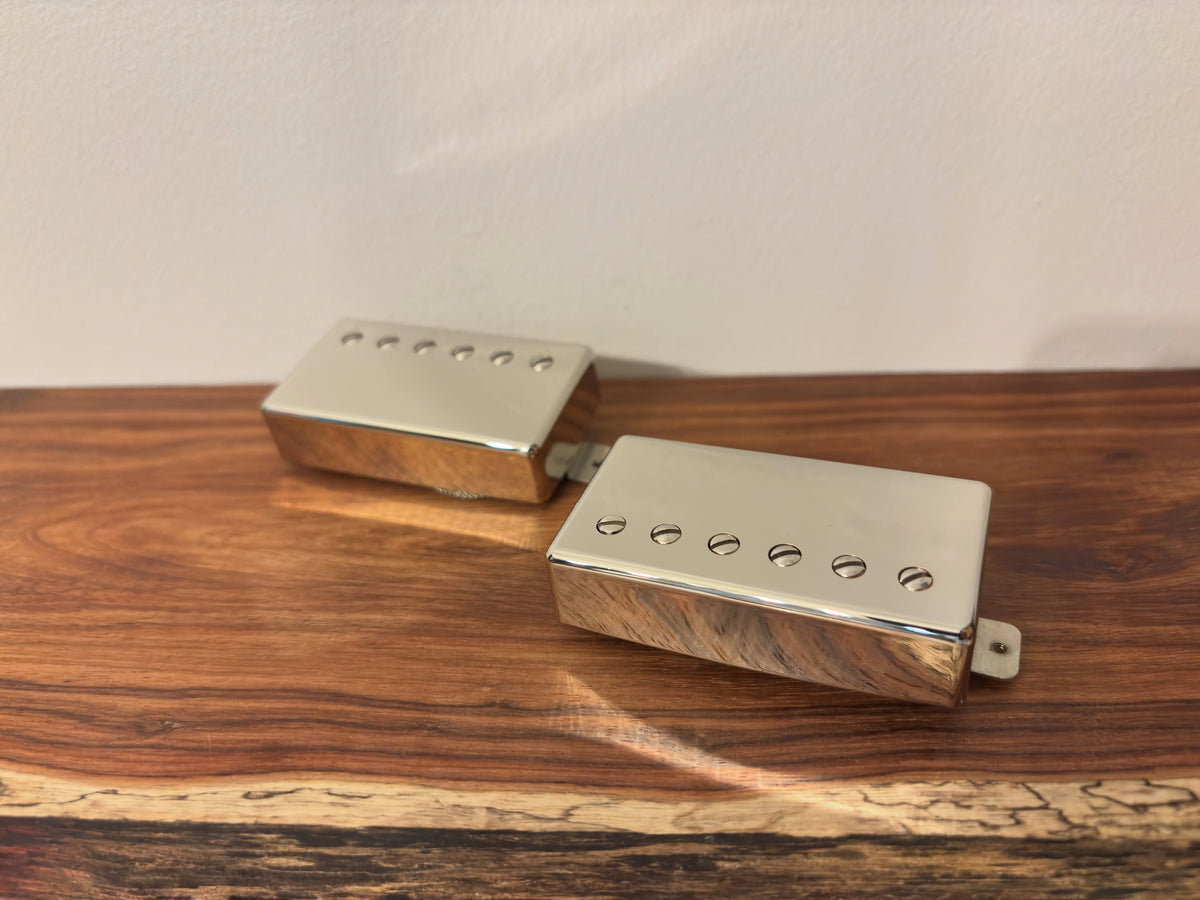
A guitar can be perfectly set up, play like home, and still leave you fighting the sound. Maybe the neck position turns to mush with gain. Maybe the bridge pickup has plenty of volume but no usable bite. Maybe your favorite guitar simply does not sound as alive through your rig as it should.
Knowing how to choose replacement pickups starts there: with the problem you want to solve, not with a spec sheet or a famous player’s gear list. A great pickup should bring more of your instrument forward - its attack, resonance, balance, and personality - while giving you the response your music asks for.
Start With the Sound You Want to Change
Before comparing magnets, DC resistance, or output ratings, spend a little time listening to your current pickups honestly. Play through the amp and pedals you actually use at rehearsal, on stage, or in your recording space. The best replacement is not always the hottest, brightest, or most vintage-correct option. It is the one that makes your guitar easier to play and more inspiring to hear.
Describe the issue in player language. Is the bridge tone thin, harsh, congested, or weak? Is the neck position dark and blurry when you add overdrive? Do chords lose separation under a worship-style ambient rig? Are clean sounds too sterile, or are high-gain sounds too loose? Those answers point toward a pickup voice far more clearly than a single measurement ever will.
It also helps to name what you already like. If your guitar has a woody acoustic ring that disappears when plugged in, preserve that. If its bridge position has the right bite but needs fuller mids, do not replace it with a radically different design. Good pickup selection is often refinement, not a total personality transplant.
Choose the Right Pickup Family First
Pickup type sets the broad tonal foundation. There is plenty of overlap between designs, especially with custom winding, but each family starts from a different place.
Single-coils
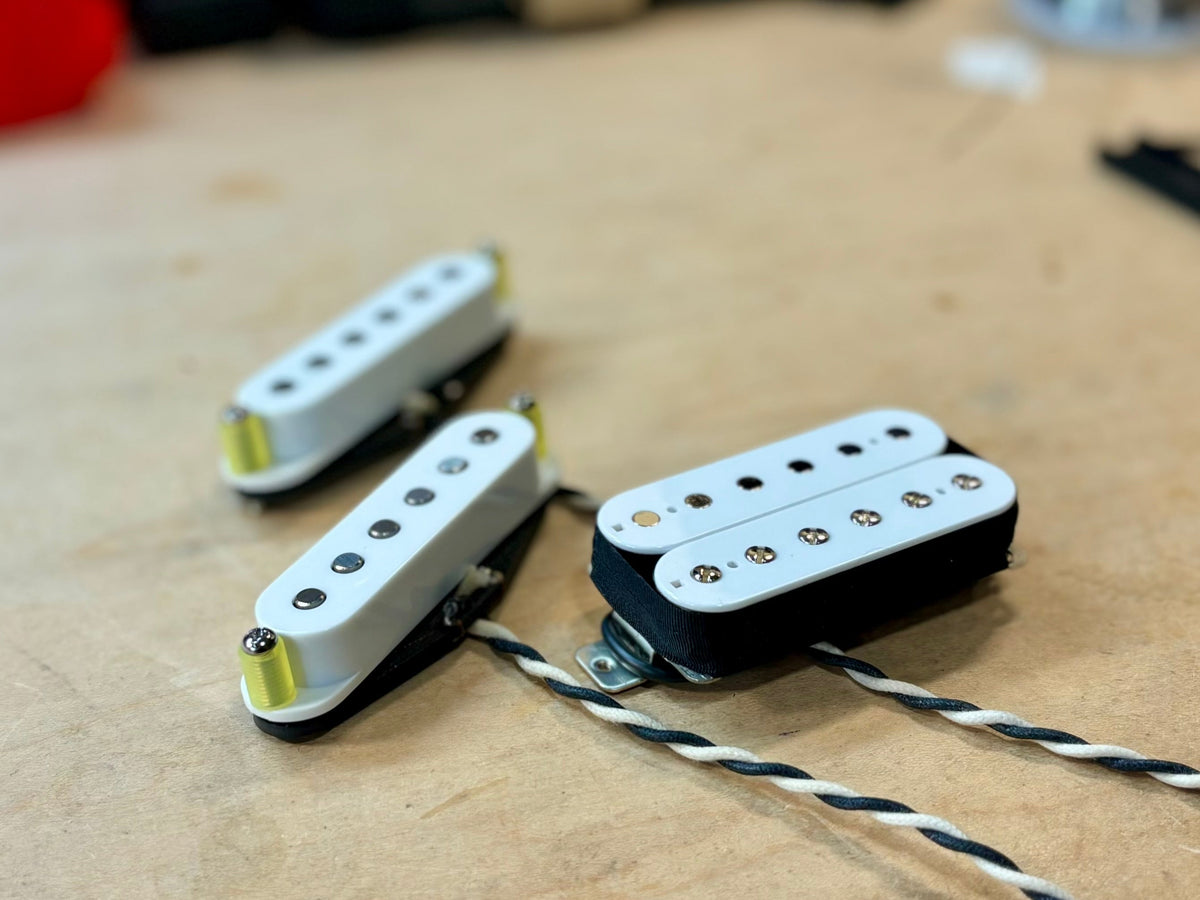
Traditional single-coils tend to offer fast attack, open highs, and a clear sense of string-to-string detail. Strat-style pickups can deliver glassy cleans, scooped sparkle, or muscular midrange depending on the wind and magnet choice. Tele-style sets often bring a focused bridge snap and a round, vocal neck sound.
The trade-off is hum. True single-coils can pick up noise from lights, wiring, and high-gain rigs. For many players, that is part of the classic feel and worth managing. If silence matters more, noiseless or hum-canceling designs can be a smart fit, though they may respond differently from a traditional single-coil.
Humbuckers
Humbuckers cancel hum by design and generally bring more midrange weight, sustain, and compression than a typical single-coil. That does not mean every humbucker is dark or high output. A lower-output PAF-style humbucker can be bright, articulate, and wonderfully dynamic, while a hotter model may push an amp harder and hold together under serious gain.
Think about whether you want openness or density. For classic rock, blues, country-rock, and expressive clean-to-crunch playing, a moderate-output humbucker often leaves more room for the guitar and amp to react. For modern rock, metal, or heavily layered music, more output and a tighter low end may make better sense.
P-90s and bass pickups
P-90s sit in a compelling middle ground: more push and midrange texture than many single-coils, but with a rawer, more immediate edge than a humbucker. They are a strong choice for players who want touch sensitivity and grit without losing too much clarity.
For bass, the same principle applies. A Precision-style pickup emphasizes solid fundamentals and punch, while a Jazz-style setup offers articulation, growl, and blendable character. The right replacement bass pickup should support the role you play in the band - deep foundation, cutting fingerstyle definition, aggressive pick attack, or a little of each.
Match Output to Your Amp, Gain, and Hands
Output is useful, but it is often misunderstood. Higher-output pickups produce a stronger signal, which can drive an amp or pedal into breakup sooner. They can also add perceived thickness and compression. That may be exactly what a thin-sounding guitar needs, but it can also make an already dark instrument feel crowded or reduce the clean headroom you enjoy.
Lower-output pickups usually give the amp more room to breathe. They can feel more dynamic under the pick, clean up more noticeably with the volume knob, and preserve detail in complex chords. That is why a vintage-voiced pickup is not automatically "weak." With the right rig, it can feel huge.
Your hands matter here, too. Players with a heavy attack may appreciate a pickup that stays clear and controlled. Players with a lighter touch may prefer a little more output or midrange support. There is no universally correct number. The useful question is whether the pickup responds the way you expect when you lean in, back off, roll down the volume, or switch from rhythm to lead.
Read Specs Without Letting Specs Choose for You
Specifications tell part of the story, not the whole story. Two pickups with similar resistance readings can sound quite different because wire type, coil geometry, magnet grade, pole pieces, baseplates, and winding pattern all shape the final result.
Magnet choice is a good example. Alnico magnets are common in vintage and boutique designs, with different grades influencing feel, attack, and frequency balance. Ceramic magnets often provide a stronger, more immediate sound and can work exceptionally well in high-output applications. Neither is automatically better. The design around the magnet matters more than the label alone.
DC resistance is frequently treated as an output score, but it is not that simple. It can offer a rough clue when comparing similar pickup designs, yet it does not account for every construction variable. A hand-wound pickup is a system of choices, not a contest to see who can print the biggest number on a spec card.
When listening to demos, use them for broad direction rather than a final verdict. The player, guitar wood, pickup height, strings, amp, speaker, recording chain, and mix all influence what you hear. Your own guitar will always get the deciding vote.
Consider the Guitar as a Whole
The same pickup can behave differently in two guitars of the same model. One Les Paul-style guitar may be naturally bright and percussive, while another is thick and mid-forward. One Strat may have a sharp, lively bridge position; another may need help finding authority. This is why a pickup that works beautifully in someone else’s instrument may not be your answer.
Pay attention to construction and electronics. Pot values can make a major difference, especially when moving between single-coils, P-90s, and humbuckers. A pickup upgrade paired with the wrong pots or a tired switch can leave performance on the table. Capacitor choice, wiring condition, shielding, and pickup height deserve attention as well.
Pickup height is especially worth checking before you replace anything. Set too close to the strings, a pickup can sound harsh, compressed, or oddly out of tune from magnetic pull. Set too low, it may seem dull or underpowered. A few turns of a screwdriver can reveal whether the issue is truly the pickup or simply its adjustment.
Think in Positions and Sets, Not Just Individual Pickups
A bridge pickup does not live alone. It has to balance with the neck pickup, work in the middle position, and make sense with your switching and wiring. If you replace only one pickup, match its output and voice to the others deliberately. A massive bridge humbucker beside a low-output neck pickup can be useful for some players, but it may create a frustrating volume jump for others.
Complete sets are designed with these relationships in mind. The bridge may be wound for extra presence, the neck may be voiced to avoid mud, and the middle pickup may be reverse-wound/reverse-polarity for hum-canceling combined positions. For Strat and Tele players who rely on in-between sounds, that detail matters.
Coil splits deserve the same level of thought. Not every humbucker produces a convincing single-coil sound when split. If split tones are central to your playing, choose a model designed to retain clarity and useful volume in that mode rather than assuming any four-conductor humbucker will do the job.
When Custom Voicing Makes More Sense
Sometimes the right answer is not sitting in a standard category. You may love the output of your current bridge pickup but want less upper-mid bite. You may need a neck humbucker that stays clear in a naturally warm guitar, or a custom polarity arrangement for an unusual build. That is where direct conversation with a pickup maker is valuable.
Bring useful details: the guitar model and wood, current pickups, pot values, amp, main pedals, tuning, string gauge, musical styles, and the exact sounds you are chasing or avoiding. A short description such as "I need clearer low strings under gain without making the top end ice-picky" gives far more direction than asking for the best pickup.
At Pegcity Pickups, that kind of back-and-forth is part of the process. The goal is not to force your guitar into a generic sound. It is to help the instrument give you more of what made you want to keep playing it in the first place.
A replacement pickup is one of the few upgrades that changes the conversation between your hands, your guitar, and your amp every time you play. Choose with your real rig and real musical needs in mind, then give the final setup time to settle. When the right match clicks, you stop thinking about the pickup and start making music.


Leave a comment
This site is protected by hCaptcha and the hCaptcha Privacy Policy and Terms of Service apply.