
A guitar can be perfectly in tune and still feel wrong. Maybe the G string jumps out while the B string disappears, the low E sounds woolly compared with the A, or one plain string seems to lose its voice as soon as you add gain. If you are asking what causes uneven string response, the answer is usually not one bad part. It is the relationship between the strings, pickups, setup, and the particular guitar in your hands.
That is good news. Uneven response is often fixable, and the best fix does not always mean replacing pickups. Start by identifying whether the imbalance is acoustic, magnetic, mechanical, or coming from the rest of your signal chain. A little patient diagnosis can turn a guitar that feels frustrating into one that responds evenly and inspires you to play it more.
What Causes Uneven String Response at the Pickup?
Pickups do not hear strings the way your ears do. They sense a moving steel string within a magnetic field, then translate that movement into signal. The strength and shape of that field, along with the string's distance from it, have a huge effect on volume, attack, sustain, and clarity from string to string.
Pickup height is the first place to look
A pickup set too close to the strings can make some notes loud, sharp, and strangely warbly. This is especially common with strong Alnico magnets and vintage-style single-coils. The magnetic pull can interfere with the string's natural vibration, producing odd overtones, weak sustain, or a pulsing effect often called stratitis.
The problem is not always the whole pickup being too high. One side may be closer than the other, so the bass strings overpower the treble strings, or vice versa. Start with the pickup at a sensible baseline height, then adjust in small increments while holding down the last fret. Listen through the amp you actually use, at a volume that reveals the guitar's real behavior.
Lowering a pickup usually adds openness and reduces magnetic interference, but it also lowers output. Raising it adds punch and immediacy, until it starts to crowd the string's vibration. There is no universal measurement that works for every guitar. The sweet spot depends on magnet strength, pickup design, string gauge, fret height, and how hard you play.
Pole piece design and string spacing matter
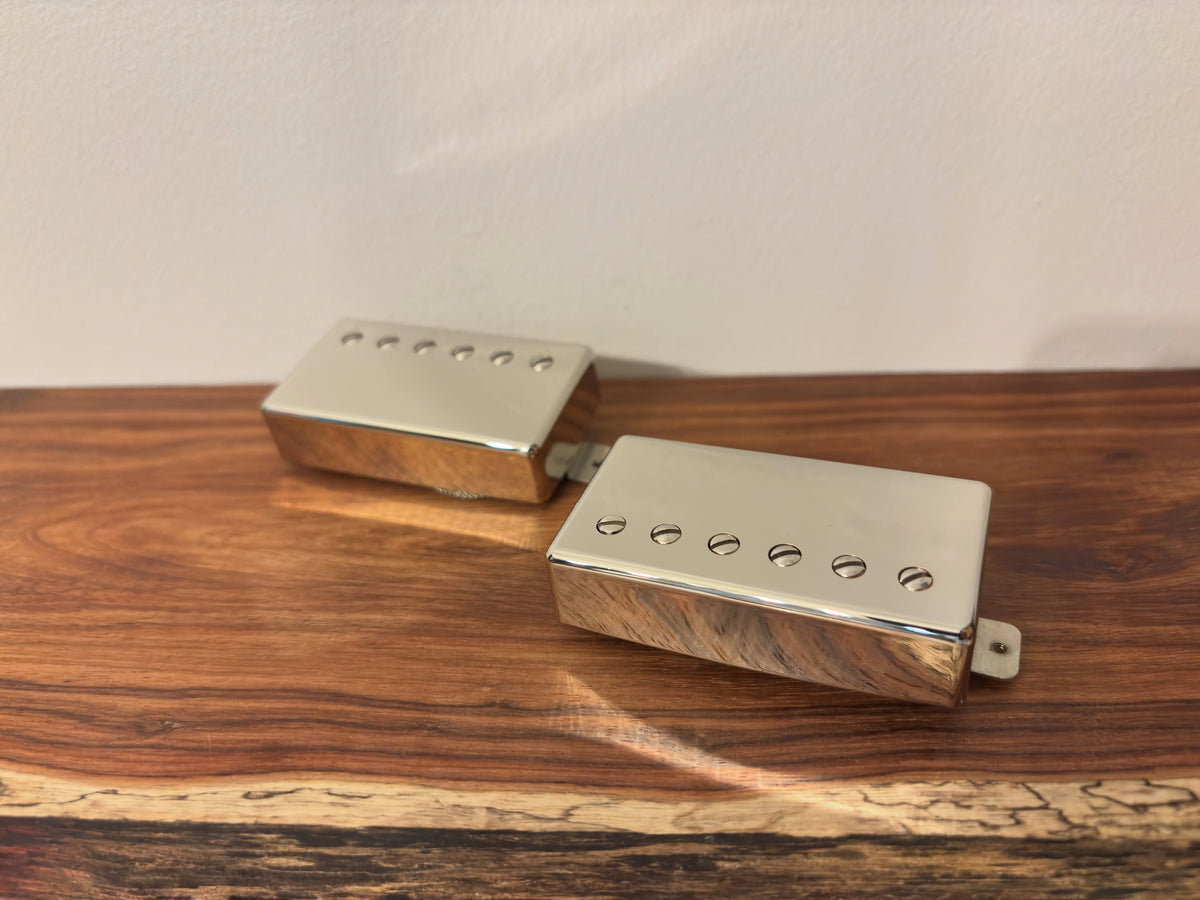
Not every pickup has individually adjustable pole pieces, but where they are adjustable, they are useful for fine-tuning a stubborn imbalance. On a humbucker, a slightly weak B or high E string may benefit from a modest pole-piece adjustment rather than lifting the entire treble side of the pickup. Make small changes. A quarter turn can be enough to hear a difference.
String spacing is another overlooked factor. If the strings sit noticeably inside or outside the active area of the pole pieces, outer strings can lose some authority. This does not mean a pickup must visually line up with every string with absolute precision. Magnetic fields have width. But a bridge with unusually wide or narrow spacing paired with the wrong pickup spacing can make a real difference, particularly on the high and low E strings.
Staggered pole pieces add another layer. Traditional stagger patterns were created around older string sets and wound third strings. Modern plain G strings, different fretboard radii, and varied playing styles do not always agree with that old geometry. A pickup that sounds balanced in one Strat-style guitar can make the G string leap forward in another.
Magnet pull and pickup voicing are not the same thing
A strong pickup is not automatically an unbalanced pickup. Output is shaped by coil wind, wire gauge, magnet type, magnet charge, pole geometry, and the rest of the design. Still, more magnetic force can make pickup height more critical.
Some pickups are deliberately voiced with a tighter bass response, a forward midrange, or a sweeter top end. That character can be exactly what a guitar needs. But if you expect every string to produce the same amount of bass, mids, and treble, even a well-balanced pickup may seem uneven. Balance is about musical consistency, not making every string sound identical.
The Guitar Setup Can Create the Same Symptom
Before blaming the pickups, play the guitar unplugged. If one string is much quieter, buzzier, deader, or less sustaining acoustically, the pickups are only revealing a mechanical issue that is already there.
Fresh strings are a simple test with real value
Old strings do not age evenly. One string may have a flattened winding, corrosion, accumulated grime, or a damaged section near the nut or saddle. A string can still tune to pitch while sounding dull and lifeless compared with the others.
Replace the set before chasing more complicated explanations, especially if the problem developed gradually. Use the gauge your guitar is set up for. Moving from .009s to .011s, or changing to a much heavier wound third string, alters tension, vibration, and the way each string drives the pickup.
Nut slots, saddles, and break angle affect energy transfer
A poorly cut nut slot can pinch a string, cause sitar-like artifacts, or keep the string from seating cleanly. At the bridge, a burred saddle or an uneven contact point can rob a note of sustain and focus. These issues often show up most clearly on open strings or in a specific area of the neck.
Break angle also matters, though more is not always better. Too little downward pressure at the bridge can make a string feel loose or less defined. Too much can create friction and tuning trouble. The goal is clean contact and stable vibration, not maximum pressure everywhere.
Fret condition and neck relief can make strings seem weak
A high fret, worn fret, or poorly leveled area can choke a note before it has a chance to ring. If the issue appears only on certain frets, investigate the fretwork and relief before touching the pickup. Likewise, action that is set extremely low may be great for a light touch but can reduce clean sustain or introduce buzz when you dig in.
This is where player preference matters. A heavy-handed player may need more clearance than someone with a feather-light touch. The right setup is the one that gives your notes room to speak without making the guitar feel like work.
Do Not Ignore the Signal Chain
An uneven guitar can become more uneven through an amp, pedal, or recording setup. Compression may exaggerate a hot string or bring out noise and weak attack from another. A high-gain amp can make a bass-heavy pickup setting feel muddy on the lower strings while the plain strings cut aggressively.
Test through a clean, uncomplicated sound first. Roll back excessive gain, bypass compressors and EQ, and compare pickup positions. If the imbalance is present only through one preset, the guitar may not be the source of the problem.
Also consider picking position and technique. Picking close to the bridge creates a brighter, tighter response; picking nearer the neck adds fundamental and warmth. A string picked at a different angle or with a heavier attack can easily seem louder. That is not a flaw. It is part of the instrument's expressive range.
A Practical Order for Finding the Problem
Work from the simplest causes to the more involved ones. Put on a fresh, appropriate set of strings and listen to the guitar unplugged. Check for obvious buzz, dead notes, poor seating at the nut or saddles, and changes in response as you move up the neck.
Then plug into a clean amp setting and compare each pickup by itself. Adjust pickup height in tiny increments, keeping track of where you started. If the overall balance improves but one string remains out of line, inspect pole pieces, pickup spacing, and string alignment. If the issue follows a certain fret area rather than a string, it is time to look at the setup.
Avoid making five changes at once. Guitar troubleshooting gets confusing fast when you change strings, raise pickups, alter amp EQ, and adjust saddles in one session. One controlled change tells you something. A pile of changes only tells you that the guitar is different.
When a Pickup Change Actually Makes Sense
A replacement pickup is worth considering when the guitar is mechanically healthy and correctly adjusted, but the existing pickup still emphasizes the wrong things. Maybe the neck position is too dark on the wound strings, the bridge pickup is thin under the plain strings, or the G string is consistently too prominent because the stagger and your guitar simply do not get along.
This is where a hand-built pickup can be more than an output upgrade. Magnet choice, coil recipe, pole spacing, stagger, winding approach, and the intended voice all affect how a pickup meets a particular instrument. At Pegcity Pickups, those are the kinds of details worth discussing before choosing a model, especially for a custom build or a guitar with an unusual personality.
A great electric guitar is not supposed to make every string sound like a copy of the next one. The low E should still have weight, the high E should still have air, and each position should keep its own character. The goal is for every string to feel present, controllable, and ready when your hands ask something of it.


Leave a comment
This site is protected by hCaptcha and the hCaptcha Privacy Policy and Terms of Service apply.