
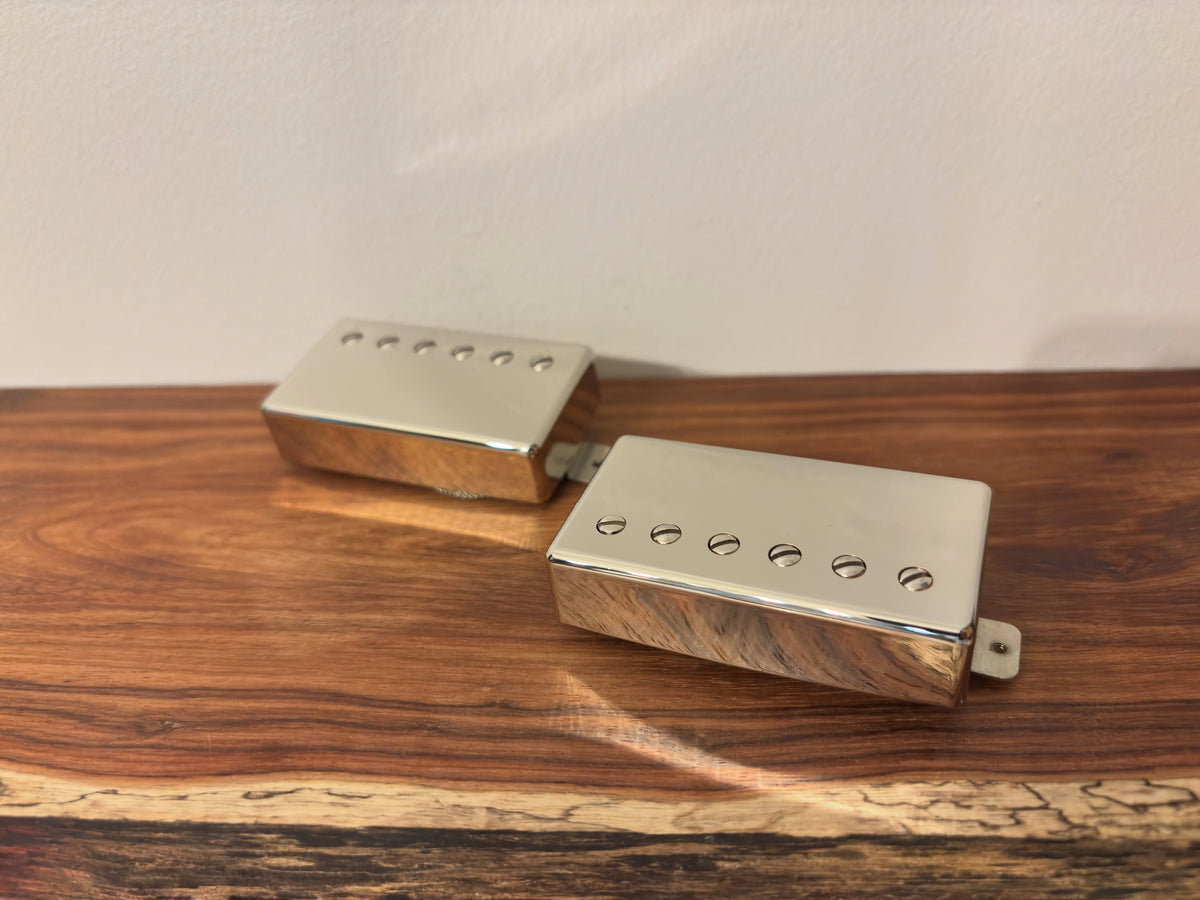
A Telecaster can tell you exactly what it needs if you listen past the usual labels. Maybe the bridge pickup has plenty of cut but turns brittle when the band gets loud. Maybe the neck pickup sounds round alone, then disappears beside a drummer. These custom Telecaster pickup examples show how a purpose-built set can address the actual guitar, rig, and player in front of you instead of chasing a generic spec sheet.
Start with the guitar, not a recipe
The same pickup can feel completely different from one Tele to the next. Ash, alder, pine, and heavier bodies all emphasize different parts of the note. A bright maple neck, a dark rosewood board, brass saddles, steel saddles, a top-loader bridge, and a traditional string-through body each change the starting point before a pickup ever enters the conversation.
That is why “vintage output” or “hot bridge pickup” is only part of the story. A great custom set balances the guitar's natural voice rather than covering it up. If the instrument is already lively and sharp, more treble is rarely the answer. If it is thick and sleepy, a lower-output pickup with clear top-end extension may bring it back to life better than simply adding output.
The amp and gain level matter just as much. A player running a clean blackface-style amp has different needs than someone pushing a British-style amp with a pedalboard. The first may want fuller mids and usable body from the bridge. The second may need tighter bass and a little less push so chords stay separated.
Custom Telecaster pickup examples by tonal goal
1. The classic bridge, with less ice pick
This is one of the most common requests: keep the unmistakable Tele bridge snap, but make it friendlier for modern stages, recording, and longer sets. The wrong fix is often a dramatically overwound coil that replaces bite with a broad, compressed midrange. That can work for some rigs, but it can also make a good Tele feel less like itself.
A better starting point is a moderately wound bridge pickup built to retain fast attack, paired with magnet selection and winding tension that round off the aggressive upper spike. The result should still have twang when you pick close to the saddles, but the high strings will be less likely to sound thin or piercing. This type of bridge pickup suits country, roots rock, indie, worship, and any player who wants clean chords to stay lively without punishing.
It also rewards dynamics. Back off the guitar volume and it cleans up rather than going dull. Dig in with a flatpick and the familiar Tele bark is still there.
2. A neck pickup that does not get muddy
Traditional Tele neck pickups can be wonderfully vocal, but some become too dark once cable capacitance, pedals, and a warm amp enter the chain. Players often try raising the pickup, only to get more low-mid congestion and less string definition.
For a clearer neck position, a custom builder may use a design that emphasizes articulation and keeps the bass from blooming too far. A slightly lower wind, a carefully chosen cover material, or a different neck construction can all help. The goal is not a thin neck tone. It is a neck tone where low strings retain shape, high strings speak clearly, and double-stops do not turn into a blanket of sound.
This is a strong choice for players who use the neck pickup for rhythm parts, fingerstyle work, jazzier chord colors, or ambient delays. It is also useful for studio guitars, where a neck sound has to occupy its own space instead of fighting bass, keys, and vocals.
3. The balanced working-player set
Some Teles spend one song on chicken-picking, the next under a fuzz pedal, then carry open chords and a solo in the same set. For that guitar, extreme vintage correctness or maximum output can be limiting. A balanced set aims for useful range rather than one narrow historical target.
Picture a bridge pickup with enough body to drive an amp naturally, matched to a neck pickup that stays open and present. The middle position should not merely be an afterthought. It should have a satisfying hollow quality for clean rhythm, with enough level and clarity to remain practical when effects are on.
This set is often the right answer for cover-band players, church players, session musicians, and anyone who wants one Tele to handle a lot of ground. You may give up a tiny bit of the most exaggerated vintage sting or the biggest possible humbucker-like shove. In return, every switch position earns its place.
4. The bridge pickup for gain without the mush
A higher-output Tele bridge pickup can be a great tool for rock, punk, blues, and heavier roots music. More coil wind can increase midrange presence and push the front of an amp harder. But output alone is not tone, and a very hot bridge design can lose the percussive attack that makes a Tele special.
A well-voiced gain-ready bridge pickup should keep the low end controlled, especially on the wound strings. It needs enough midrange to hold together under overdrive while preserving a defined edge on palm-muted riffs. Magnet type, wire choice, coil geometry, and the guitar's bridge plate all affect where that line lands.
Pair it with a neck pickup that is not dramatically underpowered. A mismatch can be useful if you intentionally live on the bridge, but most players want to switch neck for leads without a major volume drop. A custom wind lets you set that relationship around your actual amplifier instead of guessing from DC resistance numbers.
5. The quiet Tele for noisy rooms
Single-coil hum is part of the traditional experience, but it is not always part of the fun. Dimmer switches, old wiring, neon signs, computer monitors, and gain pedals can turn a favorite Tele into a difficult stage companion.
A hum-canceling custom design can reduce that noise while keeping more of the attack, clarity, and touch response players expect from a Tele-style pickup. There are trade-offs. Some noise-reduction approaches alter the openness or raw edge of a true single coil, and some players prefer the old-school interaction of a traditional set. But for a player working under difficult lights or recording near electronics, the practical gain can be enormous.
Another route is a reverse-wound, reverse-polarity pairing. That leaves the individual neck and bridge positions as single coils while canceling hum in the middle position. It is a simple, useful option for players who lean on that middle setting for clean rhythm.
Details worth discussing before a custom order
The best custom conversation starts with the whole instrument. Share the body wood if you know it, but also mention the bridge, saddles, neck wood, fretboard, pot values, capacitor, and whether the guitar feels naturally bright, dark, thin, or heavy. Tell the builder what amp you use most and whether your gain comes from the amp, pedals, or both.
Just as useful: describe what you dislike. “The bridge is harsh above the 12th fret,” “the neck vanishes in a mix,” and “my middle position is too weak” are actionable observations. “I want better tone” is honest, but it leaves too much room for interpretation.
Pickup height should be part of the final setup, too. A pickup set too close to the strings can sound congested, overly sharp, or strange in its sustain. Set too low, it may lose the energy and balance you paid for. Once the new set is installed, adjust in small increments and listen through the rig you actually use.
Build a Tele that sounds like yours
The most useful custom Telecaster pickup examples are not copies of someone else's specs. They are solutions built around a musical problem: more clarity under gain, a warmer bridge that still cuts, a neck tone with real definition, or a quieter instrument for demanding rooms.
At Pegcity Pickups, that is the appeal of working one-on-one rather than choosing by output number alone. Bring the honest details about your Tele and the sounds you are chasing. The right set should make you want to leave the guitar on the stand within reach, because every position finally gives you a reason to play another song.

Leave a comment
This site is protected by hCaptcha and the hCaptcha Privacy Policy and Terms of Service apply.