
That bridge pickup that feels thin on stage, the neck position that turns to mud under gain, the 60-cycle buzz that appears the second you stop playing - these are not small details. They change how you play. The humbucker versus single coil question is really about choosing the response that makes you want to keep the guitar in your hands.
Neither design wins by default. A great single coil can be huge, punchy, and surprisingly quiet in the right setup. A well-voiced humbucker can be open, articulate, and far from the blanket-over-the-amp sound some players expect. The useful question is not which pickup is better. It is which pickup helps your guitar, amp, hands, and music speak more clearly.
Humbucker Versus Single Coil: The Design Difference
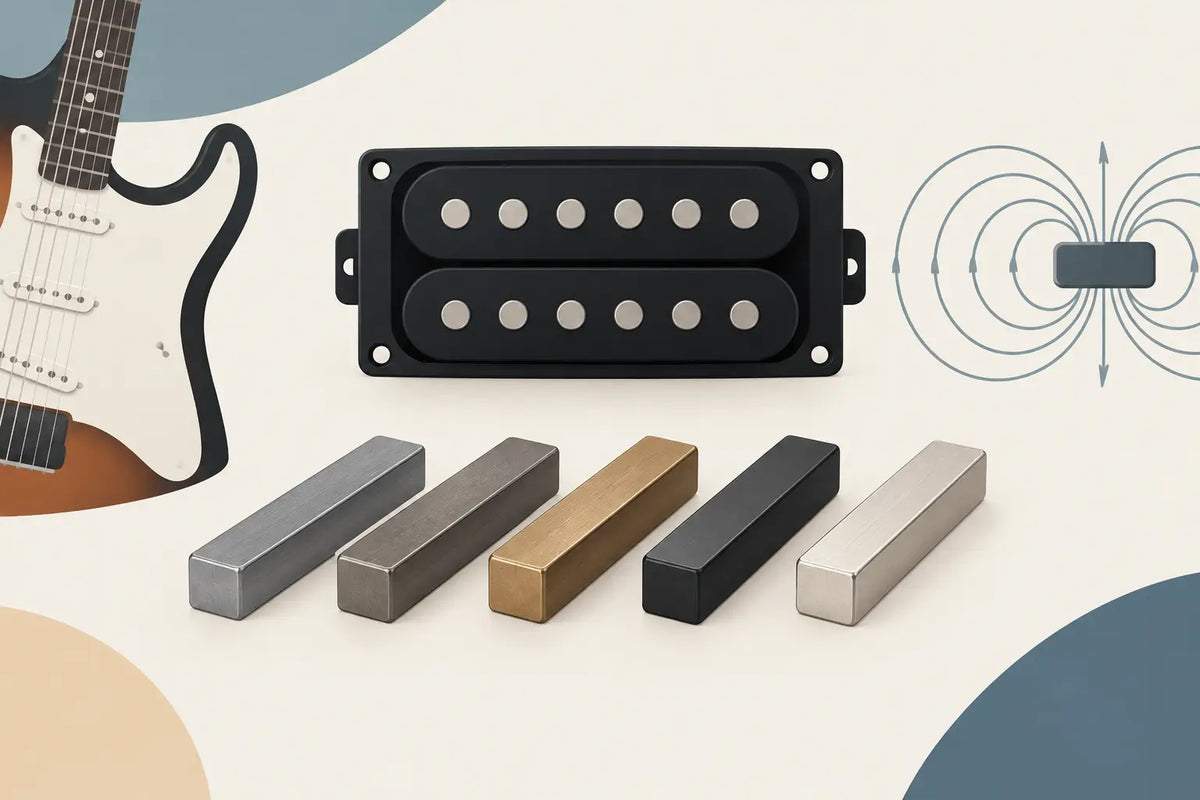
A traditional single coil uses one coil of wire around a set of magnetic pole pieces or magnets. It is a simple design with a fast, immediate response. That simplicity is part of the sound: a focused magnetic window, clear attack, lively upper mids, and a top end that can range from sweet to properly rude depending on the wind, magnets, and guitar.
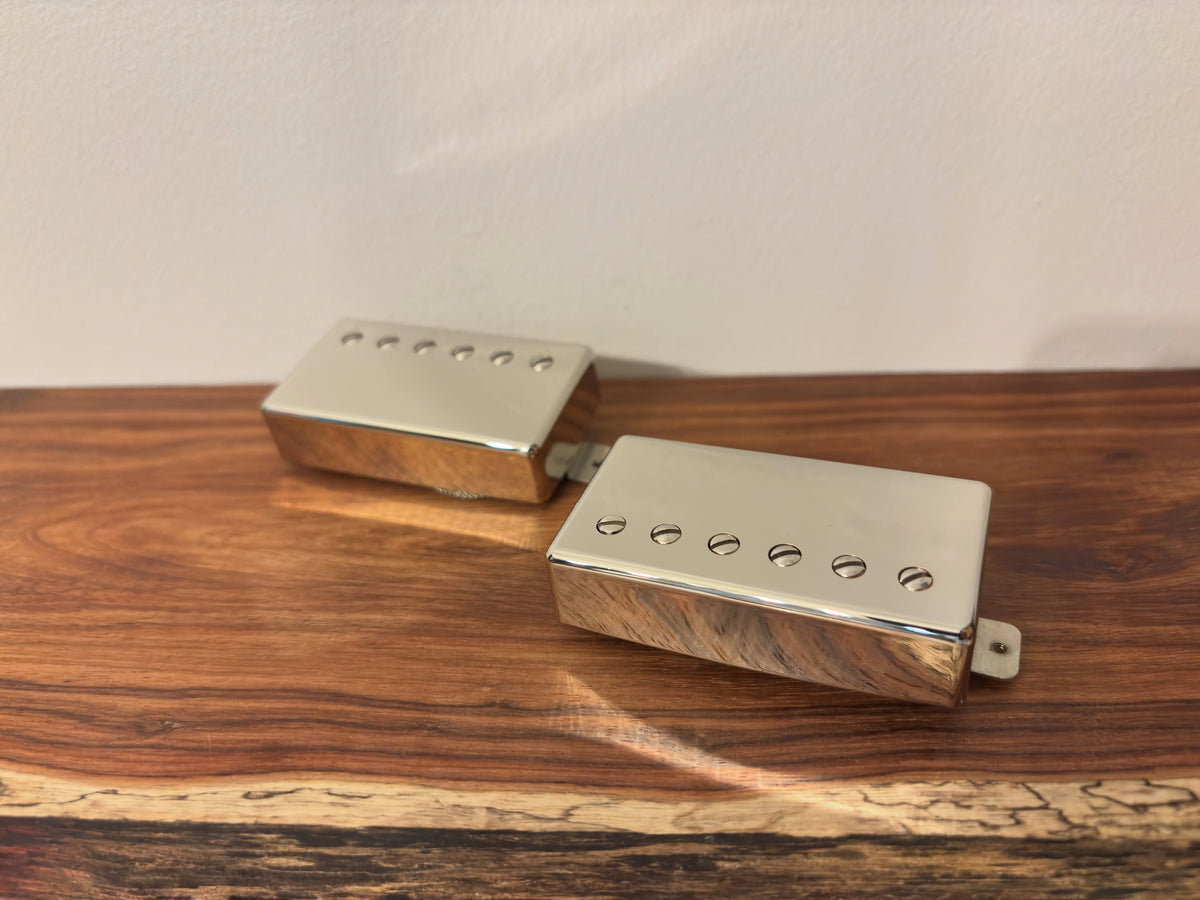
A humbucker uses two coils wired together with opposite magnetic polarity and reverse winding direction. That arrangement cancels much of the electrical hum that single coils naturally pick up from lights, transformers, screens, and stage power. It also changes the electrical properties of the pickup. In broad terms, two coils create a thicker signal with more midrange weight and a smoother top end.
But construction details matter far more than the labels alone. Magnet type, coil size, wire gauge, winding tension, pole spacing, baseplate material, and pickup height all shape the result. Two humbuckers can sound wildly different. So can two Strat-style bridge pickups. A vintage-output humbucker and a high-output ceramic humbucker may share a name, but they do not occupy the same tonal neighborhood.
What You Actually Hear and Feel
Single coils tend to put more of the pick attack and string separation in front of you. Clean chords often have a three-dimensional snap, and low-gain playing can feel touch-sensitive in a way that rewards small changes in your picking hand. A Strat neck pickup can offer glassy detail and roundness at the same time. A Tele bridge pickup can cut through a full band mix without needing much help from the amp.
That clarity also means single coils are less forgiving. A bright guitar through a bright amp can become sharp fast. Heavy gain can emphasize noise and make thin strings feel leaner than you want. Players who use big, saturated sounds may find that a traditional single coil asks for more careful amp EQ, noise management, and gain staging.
Humbuckers generally bring more body to the note. They push an amp harder, fill out the middle frequencies, and soften the sharpest edge of the attack. That can make lead playing feel easier and chords feel bigger, especially through overdrive. The classic humbucker strength is not simply more output. It is a solid, vocal midrange that gives notes authority.
The trade-off is that a humbucker can overwhelm an already dark guitar or a compressed amp setting. If the neck position is woolly, adding an even hotter neck humbucker will rarely solve it. A lower-output wind, a clearer magnet choice, or a more balanced coil design may be the better answer. Good tone is often about removing the problem rather than adding more of everything.
Output Is Not the Whole Story
Players often shop by DC resistance, but that number only tells part of the story. It can suggest whether a pickup has a lighter or heavier wind, yet it cannot fully predict clarity, output, or feel. Different wire gauges produce different readings, and magnet strength changes how hard the pickup drives the front end of the amp.
A moderate-output humbucker can feel bigger than a hotter model if it has strong magnets and a focused midrange. A single coil with the right wind and magnet geometry can hit an amp with much more confidence than a spec sheet suggests. Use numbers as a starting point, then listen for the response you need.
Noise, Gain, and Real-World Stages
The main practical advantage of a humbucker is hum cancellation. If you play under questionable venue lighting, record near computer equipment, or use high-gain amp settings, that quieter foundation can be a real relief. You can pause between songs without riding the guitar volume all night.
Single-coil noise is not necessarily a deal-breaker. It is part of the traditional experience, and plenty of players gladly accept it for the sound and feel. Strat-style sets can use a reverse-wound, reverse-polarity middle pickup so positions two and four cancel hum. Shielding the guitar cavity, using clean power, and setting gain thoughtfully can also make a major difference.
For players who want single-coil clarity with less noise, noiseless single-coil designs are worth considering. The key is voicing. A quiet pickup that loses the openness, dynamics, and useful high end you wanted in the first place is not a win.
Can a Humbucker Really Become a Single Coil?
Coil splitting is useful, but it is often oversold. When you split a humbucker, one coil is sent out of the circuit. You get a brighter, leaner sound, but you do not automatically get the exact character of a true Strat or Tele pickup. The remaining coil has a different size, position, magnet arrangement, and magnetic aperture.
That does not make a split sound bad. In the right guitar, it can be an excellent alternate voice for cleaner rhythm work, funkier parts, or cutting through a dense arrangement. A well-designed humbucker with balanced coils can produce a much more convincing split than a pickup designed only for maximum output.
Series/parallel wiring is another strong option. Parallel keeps both humbucker coils active, retains hum cancellation, and delivers a clearer, lower-output sound than standard series wiring. It is often a more useful clean setting than a split for players who want versatility without a dramatic volume drop.
Choosing the Right Pickup for Your Guitar
Start with the guitar in your hands. A bright, lightweight bolt-on may love a fuller bridge pickup, while a naturally warm mahogany guitar may need a humbucker with extra definition. Do not assume a particular body wood dictates everything, but do pay attention to the instrument's unplugged resonance, attack, and natural balance.
Then consider where the guitar has to work. If you play country, funk, indie, blues, or clean worship parts, a single coil's articulation may be the center of the sound. If you play hard rock, heavier worship tones, classic rock, or high-gain lead work, a humbucker's fullness and noise rejection can make life easier. Plenty of players need both, which is why HSS, HSH, and split-capable layouts remain so popular.
Your amp matters just as much. A dark British-style amp may welcome a bright, open pickup. A bright blackface-style amp may sound best with something fuller and less aggressive on top. Pedals matter too. A fuzz pedal can react beautifully to a traditional single coil, while a high-gain drive pedal may feel more controlled with a humbucker feeding it.
Finally, be honest about the problem you are trying to solve. If your bridge pickup is harsh, you may need a smoother top end rather than more output. If your neck pickup is muddy, you may need a clearer wind rather than a lower pickup height alone. If your guitar sounds good by itself but disappears in a band, a stronger midrange voice might be the answer.
A Better Way to Think About Pickup Upgrades
Treat a pickup change like a conversation with your instrument, not a generic parts swap. Share the guitar model, the amp you use, your favorite sounds, the styles you play, and what frustrates you about the current setup. Those details lead to better choices than chasing a single spec or copying someone else's rig.
At Pegcity Pickups, that is the fun part of hand-built work: choosing a voice that respects what the guitar already does well while addressing what it does not. Sometimes that means a crisp vintage-style single coil. Sometimes it means a lower-output humbucker with more air around the notes. Sometimes the right answer is a custom set that balances both positions instead of making one sound great at the expense of the other.
The best pickup is the one that makes you stop adjusting knobs and start playing the next part. Let the guitar tell you what it needs, then choose the design that gives your hands a reason to stay on the strings.

Leave a comment
This site is protected by hCaptcha and the hCaptcha Privacy Policy and Terms of Service apply.