
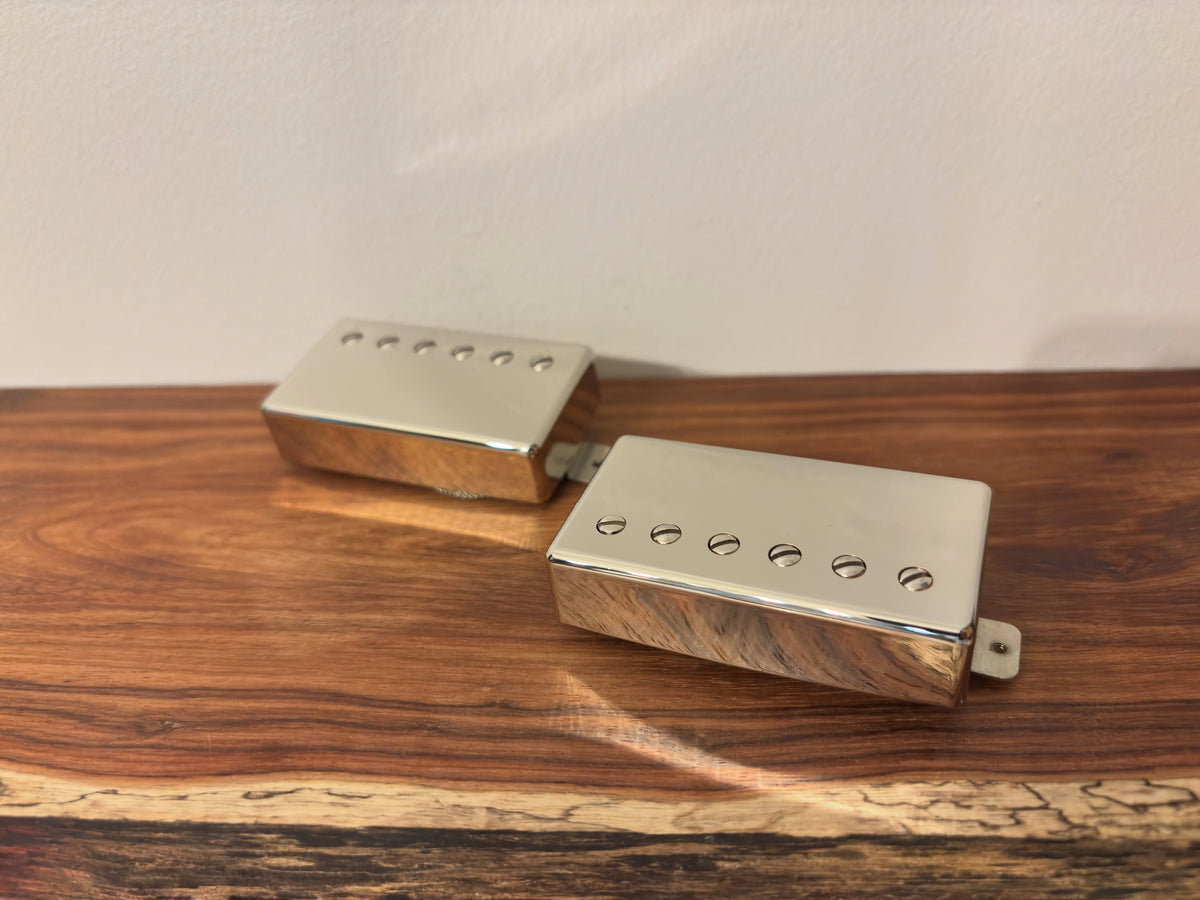
A pickup can look right on paper and still feel wrong the moment you dig into a chord. That is why an Alnico magnet comparison is useful: magnet grade affects more than output. It influences attack, string pull, low-end firmness, treble character, and the way a pickup reacts when your hands go from soft phrasing to a hard-picked riff.
For guitar players, magnet choice is not a contest to find the “best” Alnico. It is part of a larger recipe that includes coil wind, wire type, pole-piece geometry, pickup height, guitar wood and hardware, amp, and gain level. Still, Alnico is one of the most meaningful places to start when you are trying to move a guitar away from harsh, muddy, flat, or overly generic stock-pickup tone.
What Alnico Actually Changes
Alnico is an alloy made primarily from aluminum, nickel, and cobalt. In pickups, its magnetic field interacts with the vibrating strings and allows the coil to turn that movement into your signal. Different Alnico grades have different magnetic behavior, but the common shorthand of “stronger magnet equals hotter pickup” only tells a small part of the story.
A stronger magnet can create a more immediate response and a firmer sense of low end. It can also pull on the strings more, especially when the pickup is set high. A weaker magnet can feel softer, sweeter, and more open, but it may not provide the tightness a player wants from a high-gain bridge pickup. The coil determines plenty of the output and frequency balance, while the magnet helps determine how that output arrives at your amp.
Magnet charge matters, too. Two pickups using the same Alnico grade can sound meaningfully different if one magnet is fully charged and the other has been intentionally degaussed. That is one reason grade alone cannot predict a pickup’s voice with perfect accuracy.
Alnico Magnet Comparison: The Common Grades
Alnico 2: Soft attack and vocal mids
Alnico 2 is a classic choice for players who want warmth, elasticity, and a forgiving feel under the pick. Its attack is usually rounder than Alnico 5, with an inviting midrange that can make clean chords feel broad and lead notes feel vocal.
In a bridge humbucker, Alnico 2 often brings a lean or bright guitar back toward a more balanced, singing voice. It is a natural fit for blues, classic rock, roots music, and players who like the guitar to compress a little when pushed. Think less sharp edge, more bloom.
The trade-off is low-end control. If you use a lot of modern gain, low tunings, or an amp with a naturally loose bottom end, Alnico 2 may feel less focused than you need. That does not make it unsuitable for heavier music. A well-designed coil can keep it articulate. But if your main goal is a tight, percussive bridge sound, another grade may be the better starting point.
Alnico 3: Open, low-pull vintage character
Alnico 3 is often associated with early single-coil sounds, especially when a builder wants low string pull and an open, unforced response. It is generally the gentlest of the common grades in terms of magnetic pull, which can help strings ring more naturally and reduce the strange warble sometimes heard from overly close Strat-style pickups.
In the right Telecaster or Stratocaster, Alnico 3 can deliver dry, woody clarity with a sweet top end. The bass is not usually as firm as Alnico 5, but the pickup can feel wonderfully alive when played clean or just breaking up. It rewards touch and leaves room for the guitar’s own acoustic character.
It is not always the first choice for a player asking for maximum punch, a hard-edged bridge pickup, or very dense high-gain rhythm tones. For a vintage-leaning build, though, that relaxed behavior can be exactly the point.
Alnico 4: The balanced middle ground
Alnico 4 gets less attention than Alnico 2 and Alnico 5, but it deserves more time on the workbench. Many players hear it as a middle ground: firmer and clearer than Alnico 2, less sharp and forceful than Alnico 5. It can offer a strong balance of warmth, note separation, and even response.
This makes Alnico 4 particularly useful when a guitar has one obvious problem but does not need a dramatic tonal makeover. A bright guitar that becomes nasal with a warmer magnet might respond beautifully to Alnico 4. A dark guitar that gets brittle with Alnico 5 may retain clarity without acquiring an icy top end.
For a PAF-style humbucker set, it can be a great route to articulate chords and singing leads without the exaggerated bass softness of some Alnico 2 designs or the sharper attack of a more aggressive Alnico 5 setup.
Alnico 5: Punch, clarity, and tight lows
Alnico 5 is everywhere for a reason. It typically brings a fast attack, clear treble, a more authoritative low end, and a lively sense of output. In a Strat or Tele pickup, it can produce the snap, cut, and dynamic range many players expect from a classic American-style single coil. In a humbucker, it can add definition, bite, and tighter rhythm response.
This is often the right direction for a muddy neck pickup or a bridge pickup that needs more presence through a band mix. If your guitar is naturally warm, uses a darker amp, or spends time under overdrive and distortion, Alnico 5 can help notes stay separated instead of blending into a blanket of low mids.
But a bright guitar paired with a bright amp can become tiring if the pickup is voiced too aggressively around an Alnico 5 magnet. The answer is not automatically to avoid it. Pickup height, winding, pole-piece design, and value of the volume and tone pots all matter. Still, players sensitive to ice-pick treble often prefer a more moderate magnet recipe.
Alnico 8: More muscle without ceramic stiffness
Alnico 8 is a higher-output option that can bring substantial mids, powerful lows, and a more urgent feel. It is often used when a player wants a bridge humbucker with authority for hard rock, metal, or saturated lead work, while retaining the organic response associated with Alnico rather than moving to a ceramic magnet.
Compared with a typical Alnico 5 pickup, Alnico 8 can feel thicker and more compressed, with more push in the midrange. That can make solos jump forward and give palm-muted parts extra weight. It can also overwhelm a naturally dark guitar or make a vintage-voiced setup feel less airy.
Alnico 8 is a tool, not a universal upgrade. It shines when the rest of the pickup is designed to use that strength well. Dropping it into a design built around another magnet is not guaranteed to create a better pickup.
Match the Magnet to the Guitar You Already Own
A useful Alnico magnet comparison starts with the instrument, not a spec sheet. If a Telecaster bridge is painfully sharp, an Alnico 2 or Alnico 4 design may add thickness and soften the initial edge. If a Les Paul-style neck pickup gets woolly with gain, a carefully voiced Alnico 4 or Alnico 5 option can restore note definition. If a Strat has beautiful acoustic resonance but feels choked electrically, a lower-pull Alnico 3 setup and sensible pickup height may let more of that character through.
The same thinking applies to playing style. A player who works the volume knob, picks lightly, and lives near edge-of-breakup tones may love the give of Alnico 2. A player tracking tight doubled rhythms through a high-gain amp may need the immediate bass control of Alnico 5 or the added authority of Alnico 8.
Also consider the neck and bridge as a pair. A warm Alnico 2 neck humbucker can complement a punchier Alnico 5 bridge humbucker beautifully. There is no rule that says both pickups must use the same grade. What matters is whether the middle position balances well and whether each pickup solves its job in the guitar.
Magnet Grade Is Only One Part of Good Pickup Design
It is tempting to treat magnet swaps like tone knobs with labels. In reality, a pickup is a system. The number of turns on the coil affects output and resonance. Wire gauge changes capacitance and feel. Scatter winding, coil offset in humbuckers, baseplate material, pole spacing, and even the final magnet charge all influence the result.
That is why two Alnico 5 pickups can sound nothing alike, and why an Alnico 2 humbucker is not automatically “vintage” or low output. Great pickup design is about making the parts work together for a musical result, not chasing a single ingredient.
If you are choosing a replacement, describe what your guitar does now and what you wish it did instead. Mention the guitar, pickups, pots, amp, gain level, tuning, and the tones you actually use onstage or in a session. At Pegcity Pickups, those details are far more useful than simply asking for the strongest magnet available.
Your guitar already has a voice. The right Alnico choice should help it speak more clearly, respond more naturally, and make you want to keep playing after the amp should have been switched off.

Leave a comment
This site is protected by hCaptcha and the hCaptcha Privacy Policy and Terms of Service apply.